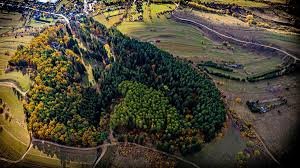
Csíky Arboretum
The legacy of an Armenian lawyer, 20 hectares — 185 species of trees and shrubs from across the world,
home of the Babeș-Bolyai University extension in Gheorgheni.
A 19th-century dream, from the Csorgó spring to the giant sequoias
The Csíky Arboretum is the largest dendrological park and arboretum in Székely Land, set on the north-eastern edge of Gheorgheni at an altitude of 870–970 metres. From here a fine view opens over the town below.
The park was founded in 1884 by the lawyer Dr. Csíky Dénes, who planted more than 185 unusual tree and shrub species from across the world. The work, which lasted 25 years, was completed in 1909. The garden is now owned by the town and has been a protected area since 1980.
The arboretum also houses the Babeș-Bolyai University extension in Gheorgheni — the Tourism Geography and Ecotourism programmes of the Faculty of Geography operate here, in living connection with the park and its natural heritage.
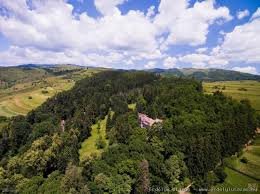 The ancient trees and paths of the Csíky Arboretum · local source
Dr. Csíky Dénes — the Armenian lawyer who dreamed up a garden
Dr. Csíky Dénes was born on 26 July 1843 in Gheorgheni into a well-to-do Armenian family. He attended primary school in Gheorgheni, then the Collegium in Șumuleu-Ciuc, and later completed his law studies in Cluj.
Although he worked as a lawyer, he was obsessed with botany. "He became an ardent supporter of the movement that aimed at improving fruit trees and acclimatising them in the Giurgeu Basin." He wanted to prove that fruit growing was possible even in the Giurgeu Basin — and acclimatised many non-native fruit trees in the garden.
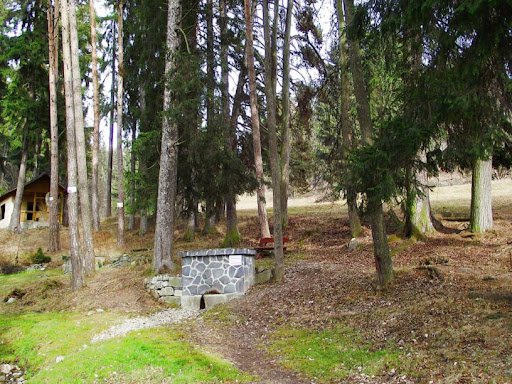
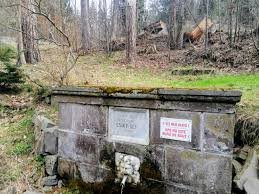
In 1884 he set to laying out the garden on a plot he had bought with his inheritance. The marble plaque beside Filep’s Spring reads: "This place was turned into a garden by Csíky Dénes. 1884". In 1922 he bid farewell to his garden and moved to Hungary to join his children, and died of cancer in Budapest in 1929.
140 years in the heart of the town
Founding
Csíky Dénes buys the land from his inheritance in the north-eastern part of Gheorgheni, around Filep’s Spring. He raises a marble plaque to mark the founding and begins to plant trees and shrubs.
The garden is completed
After 25 years of work the garden is complete. The trees were planted so that in autumn and spring the crowns of the deciduous trees traced out the monogram of Csíky Dénes — a singular living work of art.
King Michael’s baccalaureate
In the 1920s King Michael I of Romania took his baccalaureate here — a symbolic multinational class was set up for him in the garden.
Csíky leaves the garden
The founder moves to Hungary to follow his children. He donates the 20-hectare garden to the town — but it took a long time for it to actually pass into the ownership of Gheorgheni. In the meantime the garden was neglected and its condition declined.
Protected area
In May, the Csíky Arboretum was declared a protected area. In the 1980s attempts were made to map the site and identify the tree and shrub species — but no complete survey was carried out.
Amphitheatre and info-lab
The amphitheatre and the info-lab are built — a venue for cultural and educational events.
The unique map of the garden
When the Topography and Cartography programme still ran at the extension, students drew up the unique map of the Csíky Arboretum — which is still on display on the building today.
Babeș-Bolyai University clean-up
Through cooperation between the Babeș-Bolyai University extension and civic organisations, the restoration of the garden begins. Litter bins are installed, paths are refurbished, the spring is restored.
Arrival of the giant sequoias
Associate Professor Dr. István Dombay brought the two emblematic giant sequoias from Germany, from the Flower Island of Mainau. They acclimatised for 2 years in Zetea under a forester’s care before being moved to their present spot.
Volunteer work day
A campaign of historic significance: more than 200 enthusiastic volunteers cleared the garden of fallen trees and litter. Mowing, painting, tree planting, bench repair, step pouring — community work for the garden’s revival.
Treasures of the garden
Giant sequoias
The garden’s two emblematic trees — giants that arrived from the Flower Island of Mainau and acclimatised for 2 years in Zetea. The park’s most extraordinary plants.
Non-native rarities
Silver fir, various maple species, exotic shrubs. Csíky Dénes wanted to prove that even the Giurgeu Basin could host a more "Mediterranean" flora.
Themed nature trails
Illustrated paths guide children and visitors through squirrel, deer, owl and woodpecker themed sections. Playful discovery for the little ones.
Filep’s Spring and the sources
The park’s original springs still flow today. The marble plaque beside Filep’s Spring marks the founding of 1884.
The amphitheatre
The open-air stage built in 1998 hosts cultural and educational events. Together with the info-lab it shapes the park’s new face.
Bird feeders
The largest bird population of the Giurgeu Basin lives here — thanks to the water and the trees. Several feeders have been set up for monitoring purposes.
Protected rarities in the garden
 The garden’s wildlife · local source
In the early 2000s, students of the Faculty of Biology of Babeș-Bolyai University surveyed the local flora and fauna during their field practice. The results showed that the garden is rich and remarkable not only botanically but also in its animal life.
Four rare, protected animal species live in the garden:
Babeș-Bolyai University Extension in Gheorgheni
Today the Csíky Arboretum is also a setting for university programmes — the Babeș-Bolyai University Extension in Gheorgheni runs two specialisations of the Faculty of Geography here.
Tourism Geography (bachelor)
In Hungarian and Romanian. Graduates can become tourism agents, guides, tourism managers or researchers. Alongside the pedagogical module they may also obtain a specialised teaching qualification.
Ecotourism and Sustainable Development (master’s)
In Hungarian. Theoretical and practical training in ecotourism and sustainable development — the Csíky Arboretum itself is a living teaching trail for students.
When it was set up, the institution initially functioned as a college with the Topography and Cartography programme; from 2005 onward, under the Bologna system, it has offered full university education as an extension. The university library holds nearly 10,000 volumes and has refurbished infrastructure.
The early 20th-century building
The present main building in the garden was built in the early 20th century; originally a sanatorium for children with tuberculosis was opened here under the supervision of the National Social Welfare Institute. Under communism it became a preventorium, and in 1980 the institution closed. Today it houses the Babeș-Bolyai University extension.
Beside the main building stands St. Benedict Study House, consecrated in 1993 by Archbishop Dr. György Jakubinyi in honour of St. Benedict. The choice of name is no coincidence: the Benedictine motto "Ora et labora!" also guides the activity of the Study House.
St. Benedict Study House serves the ideals of the Caritas Agricultural Section: training young Transylvanian farmers who fell into crisis after the regime change. To this day it hosts youth programmes, camps, conferences and spiritual programmes.
 Buildings in the garden · local source
Useful information
What can you see?
- Giant sequoias (from the Mainau Island)
- Filep’s Spring and the marble plaque
- Themed nature trails
- Amphitheatre (1998)
- Bird feeders, springs
Best season
- Spring–summer: in full glory
- Autumn: colourful foliage
- Open all year round
- Early hours: for birdwatching
How to find
- Location: north-eastern part of Gheorgheni
- From the town centre on foot or by car
- GPS: 46.7315° N, 25.6164° E
- Entry: FREE! ✨
Tips
- Ask the Babeș-Bolyai lecturers — living knowledge!
- The monogram trees show up at leaf fall
- Bring along the picnic basket
- Related programme: Babeș-Bolyai University events