The History of Borsec
From Sigismund Báthory to Franz Joseph — more than two hundred years of history of the "queen of Transylvanian mineral waters",
from royal courts to the present day.
From discovery to the first mineral-water cures
Borsec's location — in a wild, cool valley at 882 m altitude, in the north-eastern corner of Transylvania, close to the Moldavian border — has been a magical place for centuries. Several legends circulate about who discovered the Main Spring.
📜 According to written records, Borsec first appears in documents in 1700, although its springs were known earlier. There are also accounts that Prince Sigismund Báthory (1572–1613) himself used the healing water — in the 1590s he had it transported in oak barrels to his court at Alba Iulia (Gyulafehérvár) to treat his gout.
🏛️ Another popular account holds that Count Dénes Bánffi stumbled upon the Main Spring while on a hunting trip.
⛪ As early as 1745, Borsec already had a chapel and several bath houses, raised by the Seat of Gyergyó, though they were later demolished.
👥 By 1760, the springs were already visited by more than 40 guests.
🏗️ The first serious construction work began in 1764, initiated by the border-guard regiment stationed there together with the villages of Ditrău and Lăzarea.
📋 By 1825, Borsec belonged to the two villages, and was further extended under a contract: one spring, 2 bath houses, 17 private villas and 3 military buildings were erected.
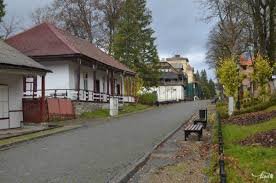
 Hétvezér Promenade — Borsec's main avenue · local source
1803 — Analysis by the Vienna Medical Faculty
🔬 The first scientific chemical analysis of the Main Spring was carried out in 1803 by the Vienna Medical Faculty. This was the first official proof that Borsec water has healing properties — a genuine international-level recognition.
📜 Dr. Vilmos Hankó, the prominent chemist of the age, described the spring as follows:
"In the strict sense of the word, it is super-saturated with carbon dioxide."
👨⚕️ In 1822, the Vienna Medical Faculty officially confirmed the water's healing power. Once experts had endorsed the Borsec springs, nothing could stop the fame from spreading across Europe — and it came to be called the queen of Transylvanian mineral waters.
1806 — The beginning of glass-bottle bottling
🏭 The year 1806 was a turning point in Borsec's history — that year the Viennese entrepreneur Anton Zimmethausen began bottling the mineral water in glass. Previously — since the 16th century — the water had been carried in clay jugs to Transylvania, Moldavia and Hungary.
🍷 In the same year a glass factory was founded in Borsec — an investment of the Lázár family. The Lower Borsec glassworks included the management office, housing for workers and officials, and the huge coal-gas furnace used to melt the glass.
📊 Explosive growth:
📦 By 1899, three million bottles of water per year were filled at the Main Spring! The mineral water conquered not only Europe but also the Far East and the West.
💼 Borsec was not only a spa town but also an industrial centre. Glass-factory workers — mainly German, Czech and Polish specialists — moved into Lower Borsec.
🏷️ A printing house was also set up to produce the labels. Borsec water took part in several world exhibitions in the 1880s, where it won numerous prizes and honorary diplomas.
1873 — Franz Joseph's gold medal
👑 The greatest moment in Borsec's history was 1873 — the Vienna World Exhibition. Held under the motto "Exhibiting Austria invites the entire world!", the expo gathered 4,700 exhibitors from the peoples of Europe, Asia, Africa and North America.
🏆 At that world exhibition, Borsec water was personally awarded a gold medal by Emperor Franz Joseph, King of Hungary, who named it "the queen of mineral waters". This title became Borsec's international brand mark.
🌍 In the 1880s, Borsec water featured at numerous world exhibitions and won further awards. A scholarship system was also in place: Géza Mezey was able to study balneology in Vienna in order to develop Borsec's spa culture upon his return home.
🎉 The Borsec of that era was one of the most elegant resort and spa towns of the Habsburg Monarchy — with magnificent bath houses, restaurants, a ballroom and music pavilions, and a lively social scene.
🇲🇩 Guests included Moldavian boyars and European aristocrats. During the July–August season, life was buzzing — orchestras, balls and theatre performances.
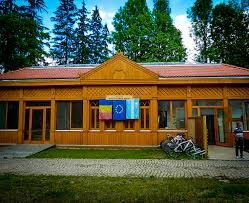
 The modern heritage of Borsec spa culture · local source
The "stocking-wearers" and the "Zipsers" — Upper and Lower Borsec
🏘️ During the 19th century, the bottling plant brought a significant immigration of glass-blowers to Borsec — chiefly from German, Czech and Polish-speaking areas. These craftsmen were called "Zipsers" (from the German ethnic name Zipser).
👖 Ethnographic distinction:
👞 In Upper Borsec lived the "stocking-wearing" Székelys — that is, the locals who wore the traditional Székely woollen leg-stockings.
👔 In Lower Borsec, by contrast, lived the "trouser-wearing Zipsers" — the glass-blowers, coal miners and foreign craftsmen.
🤝 At first, the local and immigrant populations kept to themselves — the difference in dress clearly marked the social boundary.
⛪ Over time, however, they mixed and intermarried — greatly helped by their shared Catholic faith. By the mid-20th century they had fully integrated into the Székely community.
📚 Today only family names — Schroth, Müller, Weiss, Schmidt, Bartos, Novak — still preserve their foreign origins. This multicultural past lends a special colour to Borsec's identity.
1896 — Independent administration
📋 Borsec was not an independent administrative unit until the end of the 19th century — up to 1896 it belonged to Ditrău. Only then did it gain its independence, and civil registers have likewise been kept since 1896.
🏛️ After gaining independence, Borsec began to develop rapidly. By the early 20th century, the town's tourism infrastructure was fully in place:
🛁 Cold baths: Lobogó, Ó-Sáros, Új-Sáros
🔥 Building of the warm-bath house
⚡ A huge engine house producing the steam power that lit the baths
🏥 A Cold-Water Cure Institute with friendly nurses
🏨 Luxury restaurants such as the Remény (Hope) Hotel — with furnishings considered the height of luxury at the time
📅 In 1953, Borsec officially received the rank of "spa town" — a status it has retained to this day.
 Az Ó-Sáros Bath — Borszék fürdőkultúrájának ikonja · helyi forrás
The 21st century — renewed world fame
2004 — Berkeley Springs (USA)
At the American Berkeley Springs competition, Borsec water won the title of "world's best sparkling mineral water" from among 100 mineral waters. Modern world fame!
2009 — Fairy Garden community build
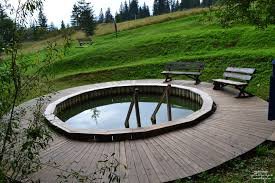
Under the leadership of the Ars Topia Foundation and Ágnes Herczeg, over 70 Hungarian university students together with locals built the folk bath in just 10 days.
2012 — Ó-Sáros reopening
Október 27-én ünnepélyesen újranyílt az Ó-Sáros Bath — Mik József polgármester vezetésével. Új korszak Borszék fürdőváros életében.
Fontana Spa & Balneo
A modern 3,000+ m² wellness complex — the peak of Borsec's medical-tourism offering. With treatments reimbursable through the Romanian health insurance (CNAS).
Global export
Today, mineral water under the "Borsec" brand appears on the markets of Europe, the USA, Australia and the United Arab Emirates — its world fame continues.
Active tourism
15 marked hiking trails, a ski slope, Via Ferrata adventure parks — Borsec is a four-season tourist destination.
The main milestones of Borsec
Prince Sigismund Báthory
Has the mineral water transported in oak barrels to his court at Alba Iulia (Gyulafehérvár) to treat his gout.
First written mention
Borsec appears for the first time in written documents.
First chapel and bath houses
The Seat of Gyergyó has the first buildings erected.
First substantial construction
A joint initiative of the border-guard regiment and the villages of Ditrău–Lăzarea.
Capping of the Main Spring
The source spring of "Borsec" is capped in a wooden housing.
Vienna chemical analysis
The first scientific analysis, carried out by the Vienna Medical Faculty.
Start of glass-bottle bottling
Launched by Anton Zimmethausen — the Lázár family's glass factory.
Recognition by the Vienna Medical Faculty
Official recognition of the water's healing effect.
Gold medal at the Vienna World Exhibition
Franz Joseph names it "the queen of mineral waters".
Several world-exhibition prizes
Borsec water wins numerous international honours.
Independent administration
Borsec separates from Ditrău — its own civil registers.
3 million bottles/year
The Main Spring's annual water-trade record.
Discovery of the Pierre Curie spring
The scientific legacy of the radioactive healing water.
Spa-town status
Borsec officially becomes a spa town.
Berkeley Springs — world first place
The title of "world's best sparkling mineral water".
Fairy Garden community build
The start of grassroots community tourism renewal.
Ó-Sáros Bath újranyitása
Mayor József Mik's ceremonial opening — 27 October.
"The Description of the Székely Land" on Borsec
"Hardly can one imagine a more beautiful or, in every respect, more interesting region than the surroundings of Borsec — as if almighty nature had wished to enclose this place of divine goodness in an enchanted garden, to make it not merely useful but also a source of delight…"
— Balázs Orbán, "The Description of the Székely Land"