Bicaz Gorge
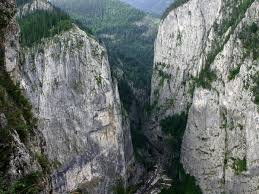
A 5 km road between 300-metre-high limestone cliffs —
from the Gate of Hell to the Throat of Hell: one of Europe's natural wonders, in the Hășmaș Mountains.
Forrás: visitharghita.com
A tectonic gorge in the heart of the Hășmaș Mountains
The Bicaz Gorge (Hungarian Békás-szoros) is a tectonic gorge in the Hășmaș Mountains, on the border between Transylvania and Moldavia — along the valley of the Bicaz River. The water carved its way through the limestone over millions of years, creating the longest and most beautiful gorge of the Eastern Carpathians.
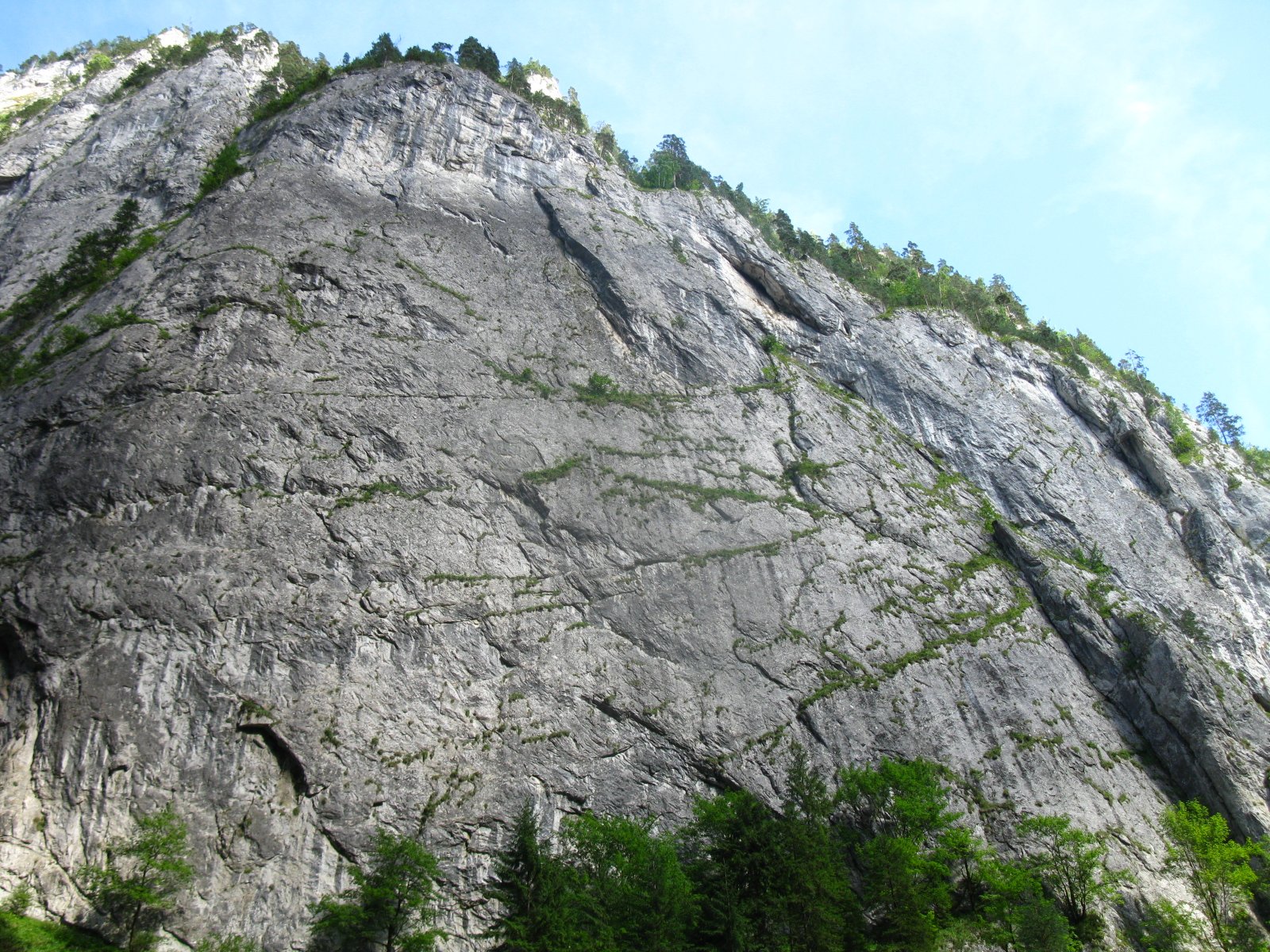
The gorge has been a protected area since 1971 and is part of the Bicaz-Hășmaș National Park. It is one of Europe's natural wonders: the winding asphalt road snakes between almost vertical limestone walls 200–300 metres high. The most striking sight is that the cliffs turn their vertical sides towards the bed of the Bicaz River almost everywhere.
The gorge is flanked by four iconic peaks: Suhardul Mic (1344 m), Făgetul Ciucului (1264 m), Piatra Altarului — Altar Rock (1154 m) and Piatra Mariei — Mary's Rock (1125 m). It lies just 5 km north-east of Red Lake — the two sights always travel together in any Transylvanian itinerary.
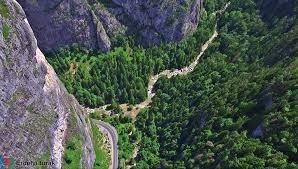 The winding road of the gorge from above · visitharghita.com
From the Gate of Hell to the Throat of Hell
In the old days, crossing the Bicaz Gorge was likened to "a descent into hell" — hence the dramatic names of the three sections of the gorge.
The Gate of Hell
The narrowest point of the gorge, where Piatra Mariei (Mary's Rock) and the Bardóc Wall come within a few metres of each other. The real thrills start here — from here the serpentine road winds further down into the gorge.
The Porch of Hell
The slightly wider middle section, closed off by the Black Tower rock cliff. Here the height is felt most strongly — the dramatic contrast between the spruce-covered slopes and the vertical limestone walls.
The Throat of Hell
The most spectacular section of the gorge, where the Bicăjel stream flows in. On the right stands the Gorge Rock, on the left the Bardóc Ledge — this panorama is the favourite photo spot of every visitor.
The peaks surrounding the gorge
The Bicaz Gorge lies in the ring of four iconic limestone peaks. Each gives the landscape a distinct character — and each is a climbers' paradise.
The western guardian of the Bicaz Gorge, which also rises above Red Lake. Here you find the famous Suhardul Mic via ferrata, a route nearly 200 metres long leading to the summit — the flagship attraction of the "Outdoor Capital of Transylvania" initiative.
The wildest stretch of the gorge — the section between Little Gorge Rock and Făgetul Ciucului — is regarded by many as the most monumental part of the entire Bicaz Gorge. The cliffs here tower almost perfectly vertically above the road.
The most prominent rock tower of the Bicaz Gorge. It rises clearly apart from its surroundings, dominating the gorge below. To its summit lead the finest climbing routes of the Bicaz Gorge — one of the most popular climbing destinations in Europe.
One of the watchtower peaks of the Gate of Hell. The closeness of Piatra Mariei to the Bardóc Wall opposite forms the narrowest point of the gorge — and the gorge's largest karst spring, Mary's Spring, also wells up here.
Waterfalls, caves and karst springs
Travelling only along the main road, the visitor easily misses the hidden pearls of the Bicaz Gorge. The side-stream gorges, caves and waterfalls hide a world of their own.
Lapoș Waterfall
At the western foot of Piatra Altarului, the Lapoș stream forms a 25-metre-long, three-step waterfall. It descends through the Lapoș Gorge, also creating several smaller cascades along the way.
Bernard and Snowdrop Caves
Two karst caves in the lower part of the Șugău Gorge. They can be entered in dry weather — though the Snowdrop Cave can only be reached by crawling on hands and knees.
Mary's Spring
The largest karst spring of the gorge, at the foot of Piatra Mariei. Its crystal-clear water bursts from deep within the limestone — a place held sacred by locals since time immemorial.
Endemic plants of the Bicaz Gorge
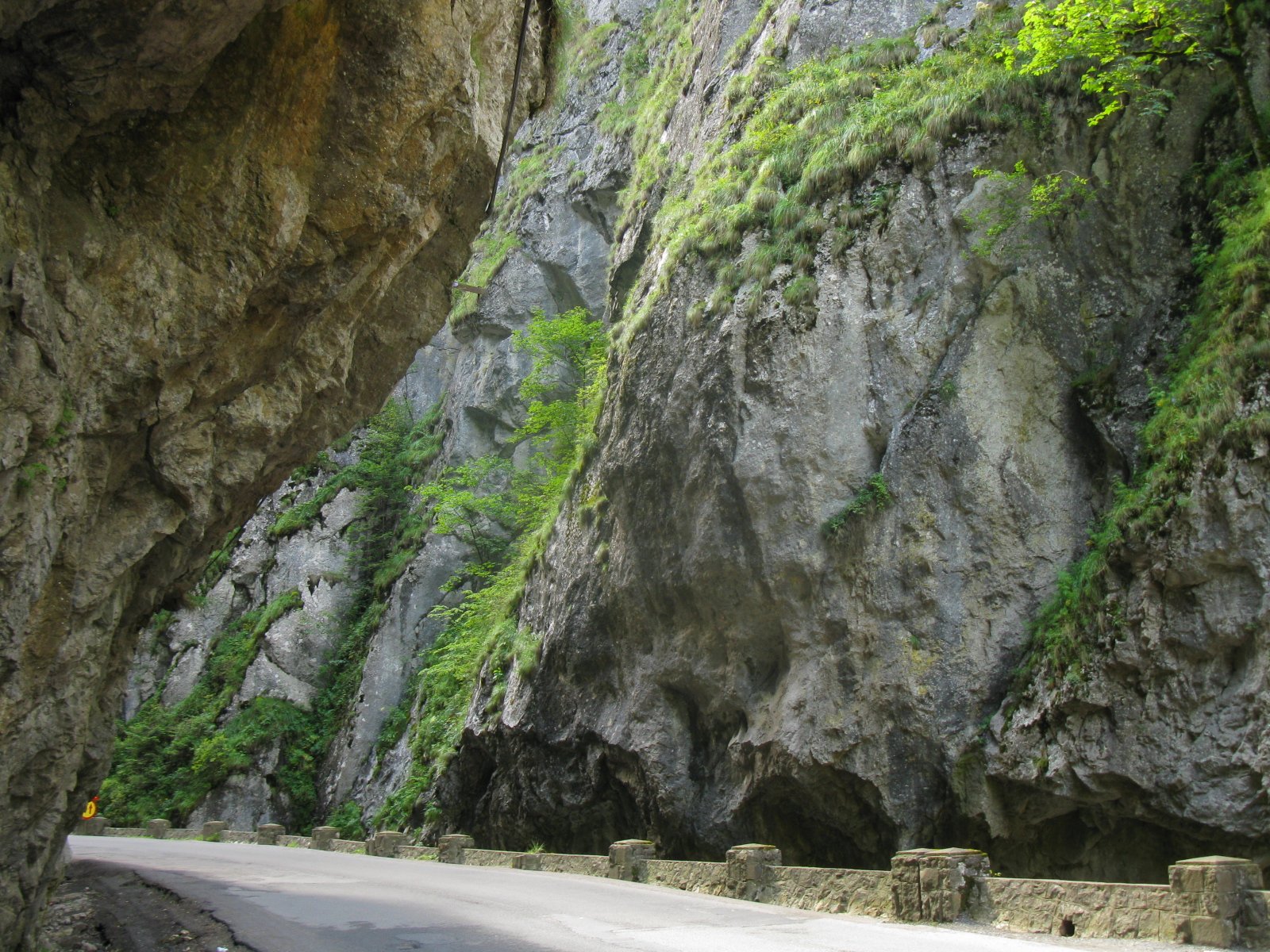 The wildlife of the limestone cliffs and spruce forests · local source
The Bicaz Gorge is not only a geological but also a biological wonder. The surface of the limestone cliffs hosts a species-rich community of rare and endemic plants.
The most remarkable is the Bicaz milk-vetch (Astragalus pseudopurpureus) — found nowhere else in the world, only on this few-square-kilometre patch. A true "living fossil" whose preservation is one of the national park's key missions.
Alongside grow mountain sandwort and the protected edelweiss — the latter is protected almost everywhere in the Carpathians, but here the ban on picking it is particularly strict. The steep slopes are cloaked in spruce forests as far as the eye can see.
Before you set out
What you can see
- 200–300 m high limestone cliffs
- The Gate, Porch and Throat of Hell
- Piatra Altarului rock tower (1154 m)
- Lapoș Waterfall (three-tier)
- Bernard and Snowdrop Caves
Best season
- Open all year round
- Spring–summer: waterfalls at their fullest
- Summer (July–August): peak traffic!
- Autumn: wonderful colours
- Winter: fresh snow, silent gorge
How to get there
- From Gheorgheni: 35 km along DN12C
- From Red Lake: 5 km to the north-east
- From Piatra Neamț: 28 km to the west
- GPS: ~46.8170° N, 25.8500° E
- Parking is limited — arrive early!
Warning
- A busy main road runs through it
- Trucks and buses also use the road
- Watch out for pedestrians — and stay alert when on foot!
- Crowds are typical along the market stalls
- Climbing: only if properly prepared!
Did you know?
The endemic plant of the Bicaz Gorge, the Bicaz milk-vetch (Astragalus pseudopurpureus), is found nowhere else in the world — only here. It is one of the most precious biological treasures of the Hășmaș Mountains.
At its narrowest, the gorge is barely 6–8 metres wide. The gap between the cliffs is so small that you feel as if both walls were "within arm's reach" — especially at the Gate of Hell.
The water of the Bicaz River springs from Red Lake! In 1837, the lake dammed up the very valley of the Bicaz, and its overflow still runs down through the gorge today — on into the Bistrița River and the Bicaz Reservoir.
The asphalt road through the Bicaz Gorge is a national highway — it carries DN12C, which connects Transylvania with Moldavia. The market stalls run by the Székelys of Corund along the roadside are the relic of a centuries-old trading tradition.