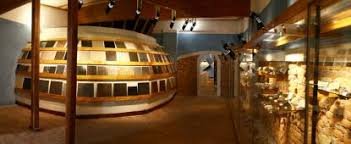
Tarisznyás Márton Museum
Housed in the 18th-century Baroque Vertán House — home to ethnographic, local history and mineralogical collections,
where the heritage of Hungarian, Armenian, Csángó, Romanian and Roma communities meets.
The past of the Gheorgheni Basin in the Vertán House
The Tarisznyás Márton Museum in Gheorgheni is the most important cultural and ethnographic centre of the Gheorgheni Basin. The institution is housed in the 18th-century Baroque Vertán House — a building erected in the 1770s by the Armenian-origin Vertán family.
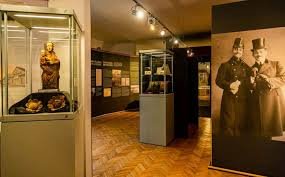
The museum welcomes visitors with rich local history, ethnographic and natural science collections. The multi-ethnic cultural heritage of the Gheorgheni Basin — Hungarian, Armenian, Csángó, Romanian and Roma — meets here in one space through parallel exhibitions.
The museum is named after the ethnographer Tarisznyás Márton (1908–1980), tireless researcher and collector of the folk culture of the Gheorgheni Basin. His life's work and collections form the foundation of the institution.
 The Baroque Vertán House, home of the museum · local source
What can you see at the museum?
Folk costumes
The costumes of the 5 communities of the Gheorgheni Basin: Hungarian, Armenian, Csángó, Romanian and Roma. The region's cultural diversity presented in one room.
Mineral collection
Dr. Jakab Gyula's private collection: "Minerals, rocks, mine flowers". The geological treasures of the region paralleling the ethnographic values.
Local history
The past of Gheorgheni, with particular focus on the Armenian heritage — from the 17th-century settlement to the town's bourgeois development.
Museum garden
In the courtyard a skansen-style group of buildings and an open-air exhibition — folk farming tools and architectural monuments in the fresh air.
An exhibition on the life of Bishop Fogarasy Mihály — an important figure in Hungarian Catholic church history.
Home of the museum
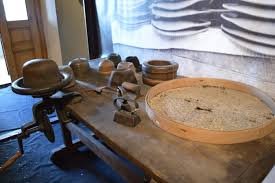 Interior detail of the 18th-century building · local source
The Vertán House was erected in the 1770s — one of the best-preserved 18th-century Baroque buildings in Gheorgheni. The Armenian-origin Vertán family was one of the town's most influential merchant families.
The building itself is a heritage monument: its characteristic Baroque façade, vaulted gateway and interior decorations are a valuable example of the era's Transylvanian bourgeois architecture. Today the museum's exhibitions present the heritage of the Gheorgheni Basin while complementing this Baroque atmosphere.
It is located in the town centre at 1 Rákóczi Ferenc Street — a few minutes' walk from Liberty Square and the Armenian Catholic Church.
The museum in pictures
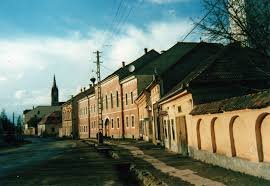
Képek forrásai: local sourceok
Useful information
Opening hours (summer season)
- Tuesday – Friday: 09:00 – 17:00
- Saturday – Sunday: 10:00 – 17:00
- Monday: CLOSED (office only)
- Last admission 30 minutes before closing
Ticket prices
- Adult: 20 RON
- Group (20+ people): 10 RON/person
- Senior: 10 RON
- Pupils, students: 5 RON
- Free: under 7, disabled visitors + carer
- Guided tour: 20 RON / exhibition
Contact
- Address: 1 Rákóczi Ferenc Street
- Phone: +40 266 365 229
- Web: tmmuzeum.ro
- GPS: 46.7235° N, 25.6079° E
Tips
- Start with the museum garden — begin outside, continue inside
- A guided tour is highly recommended — only this way the Armenian background can be understood
- The temporary exhibition changes — it pays to check in advance
- Park & restaurant on nearby Petőfi Square
Who was Tarisznyás Márton?
Tarisznyás Márton (1908–1980) was the tireless researcher and collector of the ethnographic culture of the Gheorgheni Basin. As an ethnographer he travelled for decades through the surrounding villages, documenting traditional peasant and shepherd culture, folk costumes and crafts. His work laid the foundation for today's museum collection — the central cultural institution of the Gheorgheni Basin rightly bears his name.