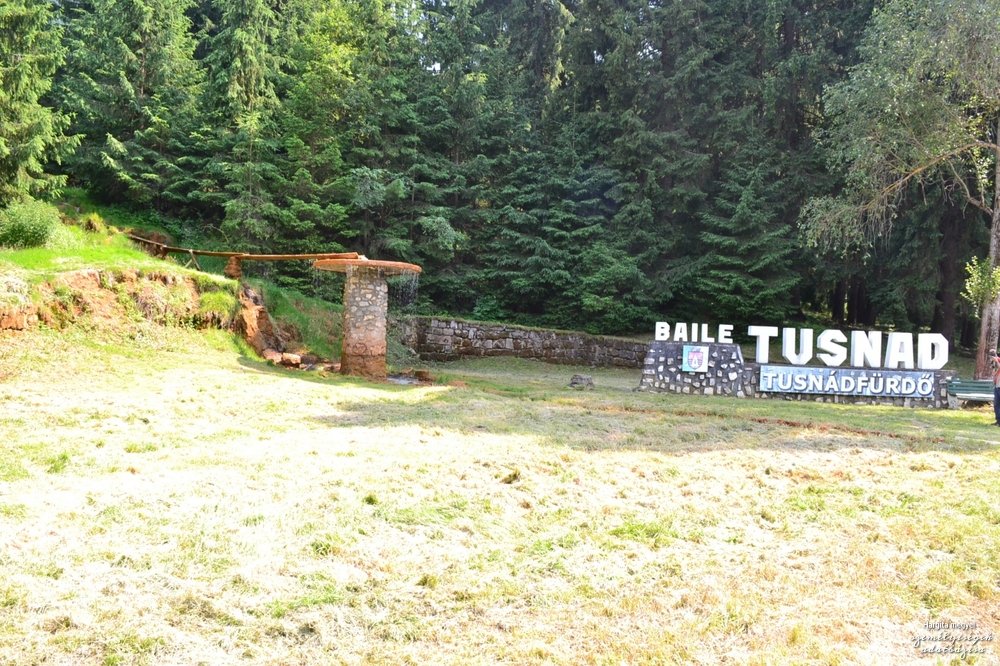
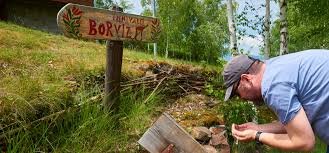
Mineral springs (borvíz)
One of the Carpathian Basin's richest mineral-water areas
60+ springs in and around Băile Tușnad
Source: helyismeret.konyvtar.hargitamegye.ro
Natural treasures of the Székely Land
Băile Tușnad and its surroundings form one of the Carpathian Basin's richest mineral-water areas, where — thanks to the post-volcanic activity, namely the proximity of the Ciomatu (Csomád) Mountains — more than 60 known mineral springs (borvíz) can be found.
The local mineral waters have a total mineralisation between 0.68 and 17.89 g/l. Their chemical composition is remarkably complex: carbonated, sodium-chloride, calcium-magnesium, iron-rich, hydrogen-carbonate and predominantly hypotonic waters.
Their scientific analysis already began in the 1860s — notably with the 1866 examinations by the Swiss chemist Dr. Heinrich Dietrich, commissioned at his own expense by Count Mikes Benedek.
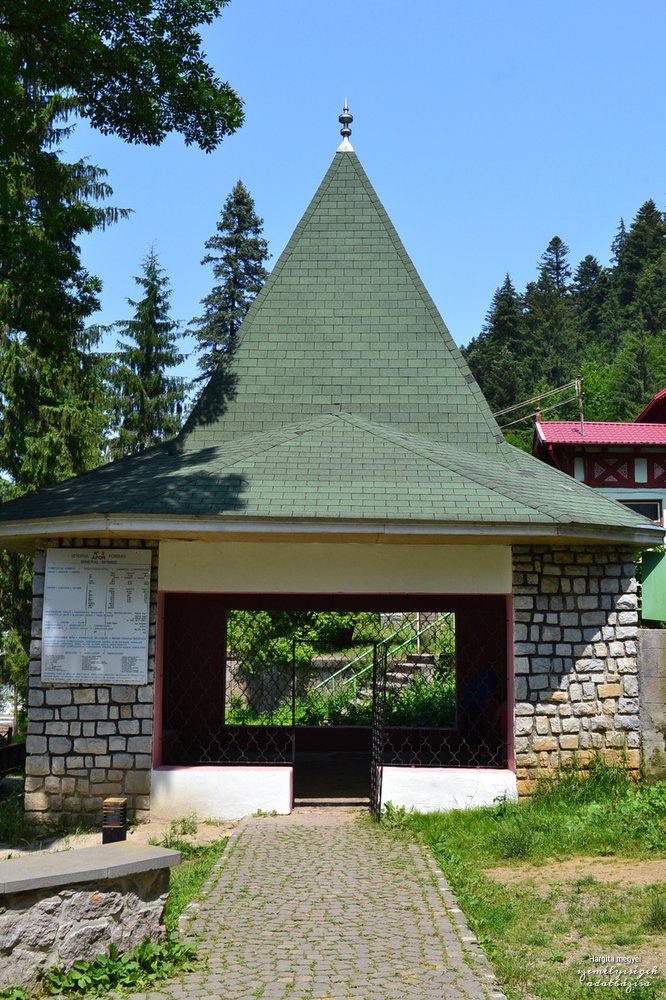 The Apor Spring pavilion · helyismeret.konyvtar.hargitamegye.ro
The most important mineral waters
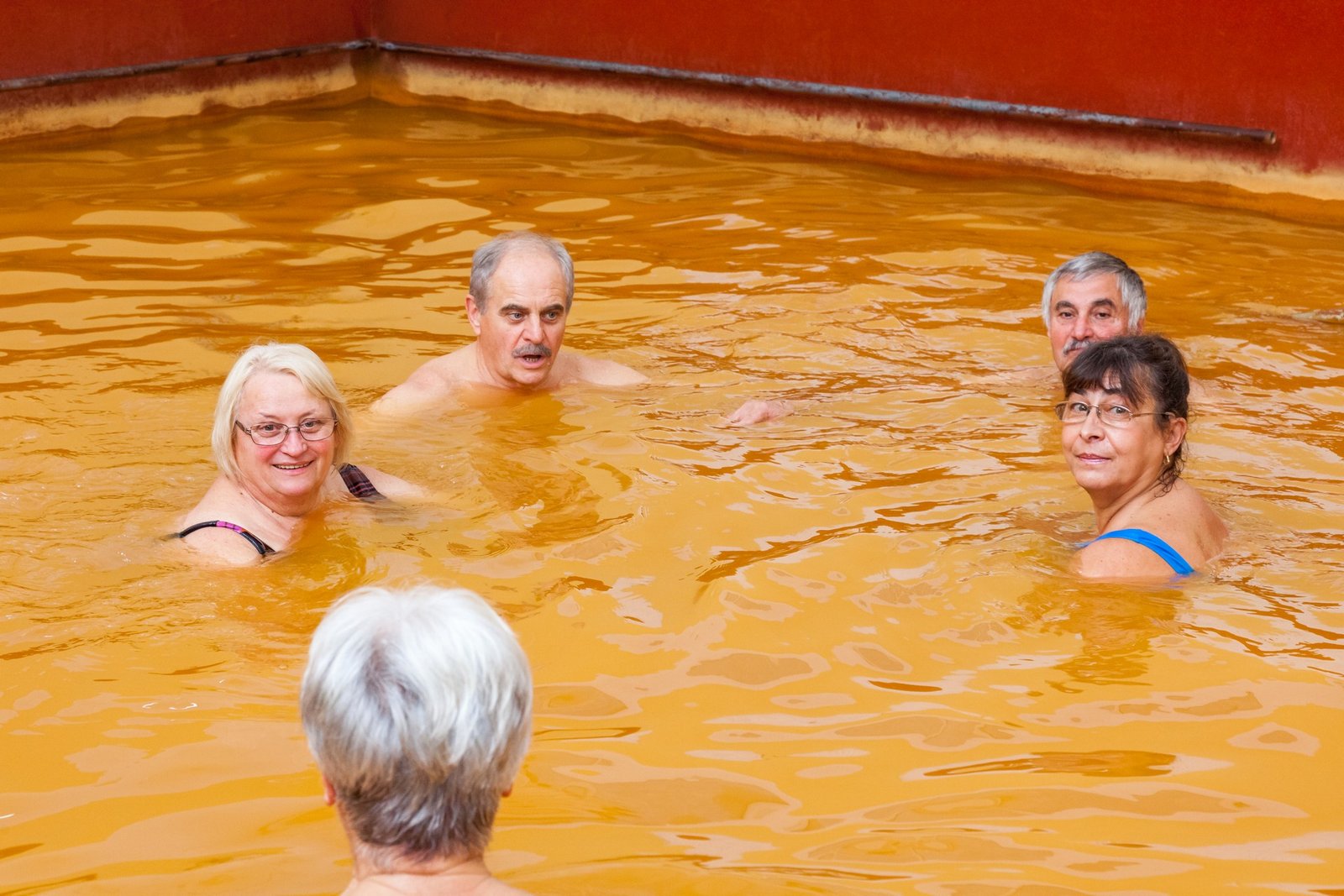
The water of springs no. 7 and 8 is carried through closed pipe systems directly into the pools and individual tubs of the treatment centres — their strong vasodilator effect is used in the preventive and rehabilitative therapy of cardiovascular patients.
An exceptionally abundant spring. Its iron-rich composition makes it equally well suited for internal drinking cures and external bathing therapies.
One of the warmer springs. In 1868 Count Mikes Benedek sent its water to Zürich for analysis at his own expense — it has traditionally formed the basis of the Tușnad bathing cures.
Contains bicarbonate, sodium, calcium and magnesium. Primarily recommended for internal drinking cures — especially for digestive complaints.
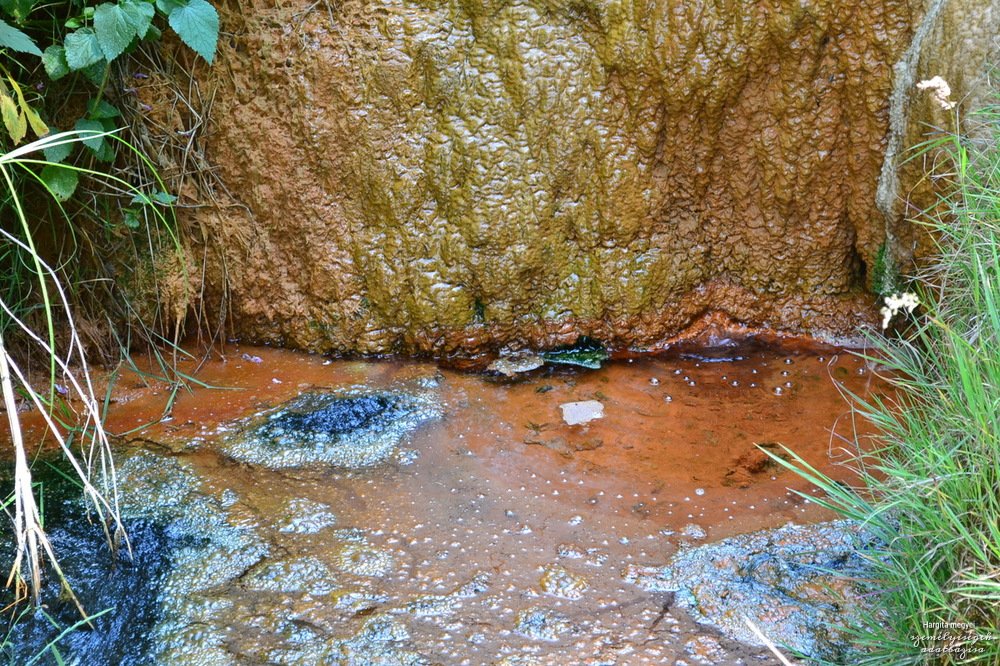
Lies a 10-minute walk from the spa centre, in a fir forest, springing from a rocky bed. Its acidulous water is suitable for treating respiratory, intestinal and bladder complaints.
Stands out from the other springs through its sodium chloride, iron and iodine content. Its higher temperature and unique mineral composition make it distinctive.
Their high dissolved content of sodium chloride, carbon dioxide and iron places them among the most valuable warm, saline, iron-acidulous mineral waters.
Two cures, one source
The therapeutic use of the mineral waters splits into two main branches — each producing its beneficial effect through a different mechanism.
The drinking cure is prescribed for the following complaints:
- Digestive disorders
- Liver and biliary disease
- Kidney and urinary-tract disorders
- Metabolic and endocrine problems
The bathing effect arises from the combined action of three factors: the temperature of the water, the hydrostatic pressure and the micro-massage of CO₂ bubbles. Indicated for:
- Chronic ischaemic heart disease
- Hypertension, valvular heart disease
- Chronic venous disease
- Post-stroke rehabilitation
- Balneo-geriatric cures (for the elderly)
Before you set out
Free activities
- Mineral-water tasting at the springs
- Drinking cure on medical advice
- Bathing treatments at the hotels
- Easy walks around the springs
Important advice
- Consult a doctor before a drinking cure
- Heart patients: extra caution
- During pregnancy medical clearance is required
- Do not take large quantities away!
Access
- Apor Spring: walking from the town centre
- Starting beside the O3zone Hotel
- Within the boundaries of Băile Tușnad
- Reachable via marked walking paths
Treatment options
- Hotel Tușnad — balneotherapy
- O3zone Hotel — wellness
- Wellness Tușnad — thermal pool
- Bálványos Resort — Grand Santerra SPA
Did you know?
According to the shepherd-boy legend, a child waded several times through the mineral mud — and his "incurable" leg eruptions miraculously healed. This story sparked the founding of the spa town in 1842.
In 1868 Count Mikes Benedek sent samples from the springs at his own expense to Zürich, to the chemist Dr. Heinrich Dietrich — opening the way to the bottling and medical use of the mineral waters.
The Apor Spring yields 7,200 litres per hour — almost 170,000 litres a day, enough to fill nearly two Olympic-size swimming pools!
The water of the Főkút (Main Spring) rivals in composition the famed healing waters of Giesshübel — it has been used for centuries to treat respiratory, intestinal and bladder complaints.