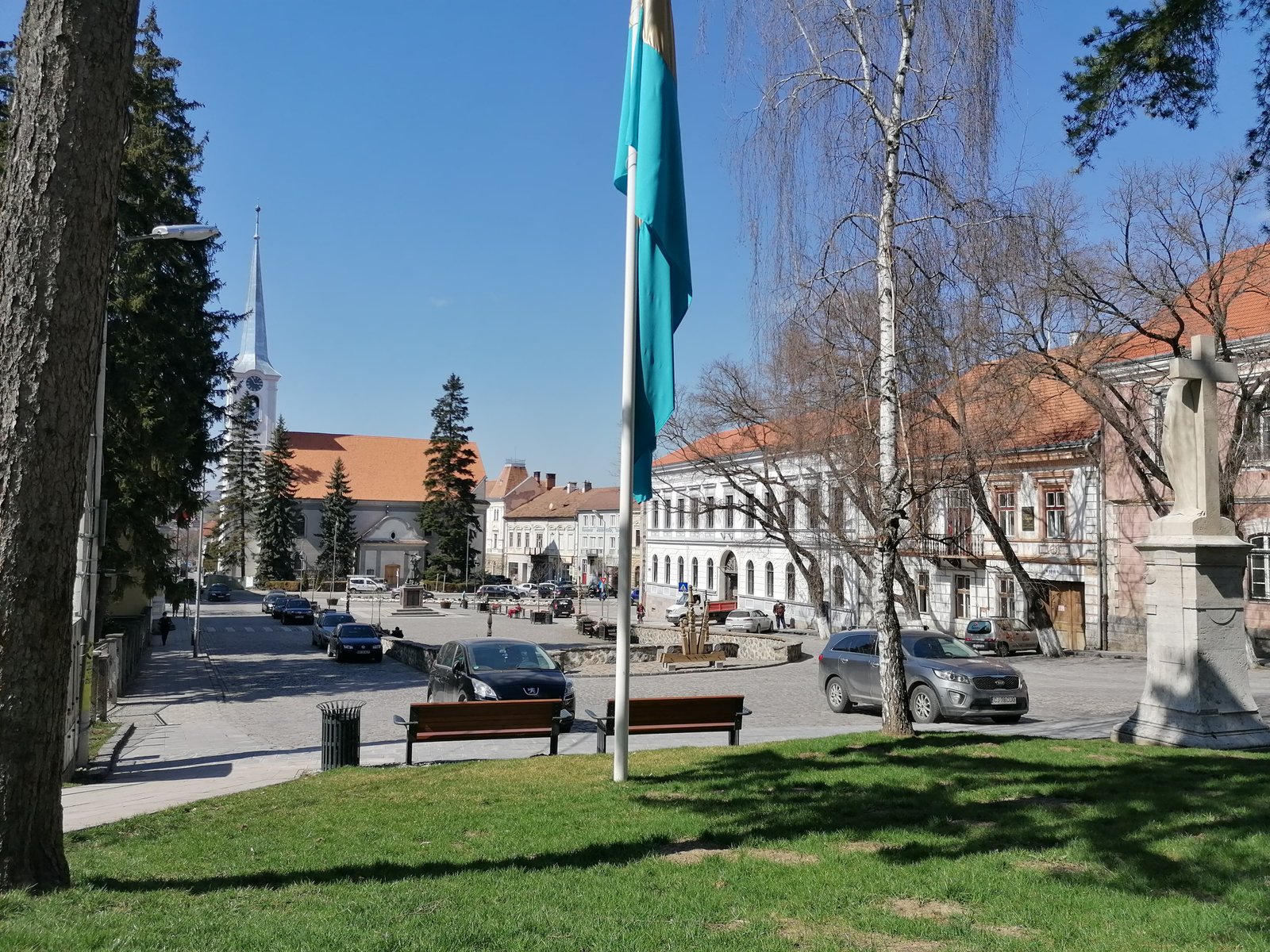
History of Odorheiu Secuiesc
From the Árpád-era "Telegd" to one of Transylvania's leading school and cultural centres —
nearly seven centuries of turbulent history of a princely seat that grew into a city.
The Árpád-era princely seat
Odorheiu Secuiesc, lying in the central part of the Odorhei Basin, developed on the eastern edge of the Târnava Hills, along the upper reaches of the Târnava Mare river. In the Árpád era it can still be reconstructed as a hamlet-like settlement, probably called "Telegd".
According to archaeological finds, the settlement's beginnings reach far further back than the written sources indicate: artefacts unearthed within the town date to the 12th–13th century.
The first surviving written mention of the priest of the St. Nicholas Hill church dates from 1317, when its priest, named Konrád, is recorded. This church is the town's first known ecclesiastical institution.
The town's Árpád-era name was probably "Telegd". The present-day "Udvarhely" name suggests that this was where the count of the Székelys held his court.
— Hungarian historical sourceFrom the papal tithe register to the age of King Matthias
It is first mentioned in 1301 as Uduord. It then appears in the 1333 papal tithe register as Uduorhel — when its priest István paid seven ban-denars as tithe. From this period onward its official urban existence is documented.
📜 1357: under King Louis I, the first Székely National Assembly convened here, clarifying legal matters concerning both the Székelys and several Transylvanian fortresses — Odorheiu Secuiesc became the traditional centre of Székelyföld (Szeklerland): appeals against judgments by the Székely seat courts could be lodged here.
👑 King Sigismund elevated the settlement to city rank and visited it personally when he had conflicts with István, voivode of Transylvania. The princes of Transylvania granted the town every privilege.
🏰 1492: the town's first fortress was built around an earlier monastery. This later became the predecessor of Székelytámadt Fortress.
The Székely uprising and Székelytámadt Fortress
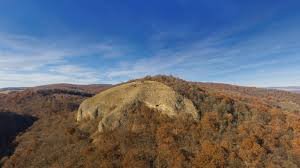 Remains of Csonka Fortress (former Székelytámadt Fortress) · local source
In the mid-16th century the Székelys' privileges grew ever more restricted. In April 1562 the Székelys gathered in and around Odorheiu Secuiesc, declaring themselves a Székely national assembly. The rebels numbered several thousand — probably more than ten thousand.
After the uprising was crushed, Prince John Sigismund of Transylvania built Székelytámadt Fortress between 1562 and 1565 — the name speaks for itself: it was cynically called "Székelytámadt" ("the one that attacks the Székelys"), built to humiliate the defeated Székelys.
In 1558 the town received a tax exemption from Queen Isabella — but the era of privileges was soon to be shaken.
From Székelytámadt to Csonka Fortress — the calvary of a stronghold
Building of the first fortress
The first fortification is built around an earlier monastery.
Székelytámadt Fortress
John Sigismund has it built using the monastery, to humiliate the defeated Székelys.
First destruction
The Székelys who sided with Voivode Michael the Brave tear down the fortress — taking revenge for their humiliation.
Ali Pasha burns it down
During the Turkish attack the fortification again suffers severe damage.
Gabriel Bethlen has it rebuilt
Prince Gabriel Bethlen of Transylvania orders the fortification to be rebuilt.
General Tiege plunders it
During the Rákóczi War of Independence the imperial troops of General Tiege plunder the fortress.
Pekry Lőrinc has it demolished
Pekry Lőrinc, who recaptured the fortress, had it pulled down by the Székelys — from then on it is called Csonka Fortress ("Truncated Castle"). Substantial remains of the fortification can still be seen today.
Two denominations — two great colleges
Odorheiu Secuiesc has been known as a "school-city" since the late 16th century — and today still one in four residents is a student! The town gave Transylvania two famous secondary institutions.
Jesuit lower grammar school
The town's first grammar school — founded by the Roman Catholic Jesuit order, at the time it offered only grammar-level instruction. Here the foundations of Catholic education were laid, from which the Roman Catholic Main Grammar School later grew.
Reformed College
The Protestant high noble Count János Bethlen, Chancellor — a graduate of Frankfurt University, Chancellor of Transylvania, supreme captain of Udvarhely Seat — donated one thousand gold pieces for raising the existing trivial school to grammar-school rank. The College's co-founder was his son, Count Miklós Bethlen.
From 1736 the Reformed grammar school added poetics and rhetoric classes — from then on it offered full humanist training. The Odorhei "clerk-jurists" rose from various strata of Székely society and, through constant study, navigated the complex world of the Székely legal system.
📚 The two institutions were later attended by important figures: Orbán Balázs ("the greatest Székely"), Áron Tamási, Sándor Tomcsa — all of them went to school in Odorheiu Secuiesc.
🏛️ 1780–1781: the new building of the Reformed College was built by Backamadarasi Kiss Gergely (1737–1787) on the town's main square — splitting the former Market Square in two into Lower and Upper Market Squares. The famous rector-professor's "KG" monogram can still be read on the western tile roof of the main-square Reformed church, accompanied by the year 1781.
„Én Bethlen János szemem előtt viselvén, hogy az Isten a világi mulandó jókban csak sáfárrá tett, keresztyén kötelességünk akarván vékony tehetségem szerént felelni, testamentumomban hattam volt az udvarhelyi orthodoxa scolának 1000 aranyat..."
— Testament of Chancellor János Bethlen, 1670Heyday of the school-city
The 19th century is the era of Odorheiu Secuiesc's modernisation. The town became the seat of Udvarhely County, and its institutions developed rapidly. In the spirit of the Reform Era, new schools, offices and bourgeois homes were built.
1862: the Hungarian-language grammar school opens — an important step in expanding civic education. The town clearly became the cultural centre of Szeklerland.
1886–1887: the Reformed College building is remodelled inside and out — a storey is added, the attic rooms and the bell-house disappear, the windows are enlarged. This is how the school takes on the shape still visible today.
1893: the Odorhei Stone- and Clay-Working Vocational School is founded, set up to train the master potters from the surrounding pottery villages (especially Corund).
Horseshoe Square — former Market Square, today Márton Áron Square · local source
Wars, occupations, survival
📅 1910: the town has 10,244 inhabitants — overwhelmingly Hungarian. Until the Treaty of Trianon it is the seat of the Udvarhely district within Udvarhely County.
⚔️ August 1916: when the Kingdom of Romania invades Transylvania, the townspeople load their belongings onto carts and flee to Hungary — but the refugees do not even arrive before Austro-Hungarian and German troops drive the Romanians out of Transylvania. The third year of the war brought horrors upon all of Szeklerland.
🗿 8 December 1917: on the main square, the monument to the fallen heroes of the 82nd Székely Infantry Regiment is unveiled — the Iron Székely statue. The original wooden statue was carved from Turkey oak and clad in steel scales — hence its nickname. There were four creators: Sergeant István Erdélyi (designer), Corporal Ottó Herman, Lance-corporal Géza Rózsa and Private Jenő Sipos (three Székelys + one Saxon).
🔴 1919: during the Romanian occupation, the Iron Székely is torn down and dismantled — only the pedestal remains for decades.
🔄 1941: during the Hungarian re-annexation, a national flag with a Székely carved post (kopjafa) is placed where the Iron Székely stood.
🏛️ 1968: as part of the Ceaușescu regime's administrative reform, Odorheiu Secuiesc becomes a municipality, part of Harghita County. Difficult years of Romanianisation policy follow.
🕊️ 15 March 2000: sculptor János Szabó's bronze replica stands again in its place — the Iron Székely returns. The original inscription is still legible on the pedestal: "Bring edelweiss from the Harghita — the Székely heroes are immortal!"
Great figures of the "Székely mother-city"
Mózes Székely
Transylvania's only Székely prince — born in Odorheiu Secuiesc in 1553. He spent his childhood here; his father, János Literáti Székely, was supervisor of the Székely salt mines from 1568.
István Lakatos
Chronicler, priest — one of the key sources for the town's early modern history.
Backamadarasi Kis Gergely
The Reformed College's renowned rector-professor, builder of the 1780 main-square edifice. His monogram can still be read on the church tiles.
Orbán Balázs
"The greatest Székely" — he studied at the Roman Catholic Main Grammar School in Odorheiu Secuiesc before writing the six-volume monograph "A Description of Szeklerland".
Mózes Szakács
Reformed minister and college teacher — born in Beta (Betfalva), he taught and died in Odorheiu Secuiesc.
Áron Tamási
Hungarian writer from Transylvania — from 1910 to 1916 he was a pupil of the Roman Catholic Main Grammar School in Odorheiu Secuiesc (the school still bears his name today). From here he was conscripted into World War I.
Sándor Tomcsa
Writer and caricaturist — a native son who "could never leave" Odorheiu Secuiesc. Here he drew his first caricatures. Today the town's theatre bears his name.
Rezső Soó
Biologist — his statue was erected in the town in 2003. One of the greatest figures of Hungarian botany.
László Tompa · Ferenc Móra · Dávid Baróti Szabó
Further important figures with statues or commemorative plaques in the town. The 13 busts of the "Park of Remembrance" portray the great figures of Hungarian history and literature.
Seven centuries — at a glance
Hamlet-like settlement
Archaeological finds indicate an "udvarhely"-type settlement already exists — possibly named "Telegd".
Priest of the St. Nicholas Hill church
Mention of the priest Konrád — the first ecclesiastical record from the town.
Papal tithe register: "Uduorhel"
The first official mention — the priest István pays 7 ban-denars.
First Székely National Assembly
Under King Louis I — Szeklerland becomes a judicial centre.
First fortress
The town's first fortification is built around a monastery.
Tax exemption
The town receives a tax exemption from Queen Isabella.
Great Székely uprising
Over 10,000 rebels gather in the town — after their defeat, John Sigismund has Székelytámadt Fortress built.
Jesuit lower grammar school
The beginning of the school-city era — the first grammar school is founded.
Reformed College
With Chancellor János Bethlen's gift of 1,000 gold pieces — one of Transylvania's leading institutions.
Csonka Fortress ("Truncated Castle")
Pekry Lőrinc has the fortress demolished — from then on it is called "Csonka Fortress".
New College building
Built by Backamadarasi Kis Gergely on the town's main square.
Hungarian-language grammar school
Expansion of civic education — a modern school.
Stone- and clay-working vocational school
To train the masters of the surrounding pottery villages (Corund!).
Romanian invasion and Iron Székely
1916: population flees. 8 December 1917: unveiling of the Iron Székely.
Trianon and the toppling of the Iron Székely
After annexation to Romania, the monument is destroyed.
Municipality status
New administrative status as part of Harghita County.
The Iron Székely returns
János Szabó's bronze replica is unveiled on 15 March.