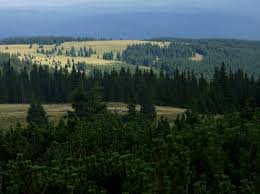
History of Toplița
From a Moldavian settlement to the main town of the upper Mureș valley —
458 years of timber trade, log rafting, spa tradition and noble family heritage
Source: marosheviz.info
From a Moldavian settlement to the main town of the upper Mureș valley
The history of Toplița reaches back more than 800 years: the first written mention of the area dates from 1228, while the settlement was formally founded in 1567. The town's name changed several times over the centuries — Taplócza, Toplicza, Gyergyó-Toplicza, Oláh-Toplicza, and from 1907 Maroshévíz / Toplița — and its story weaves together the traditions of log rafters, noble families, spa visitors and great native sons.
The story of the founding
The area was the estate of Ban Simon until 1228, after which it passed into the possession of the Bánffy family, who managed to hold on to this vast domain until 1945.
The settlement was founded in 1567 by Kozma Petrichevich Horváth, castellan of Brâncovenești (Marosvécs) castle, on land held by Pál Bánffy. Kozma settled three Moldavian families here and named the small village Taplócza.
The Petrichevich-Horváth family was a Croatian noble family of Dalmatian origin, who settled in Transylvania in 1548. Kozma himself (1523–1590) was supreme captain of Făgăraș, princely councillor and a trusted man of the Transylvanian prince Stephen Báthory.
In 1658, young Gyergyó-Toplița was destroyed by Moldavian troops led by Pintea. After 1660 the Bánffys settled 391 Romanian serf families from the Făgăraș region, moved from Deda to Toplița — creating the mixed ethnic character of the settlement that has survived to this day.
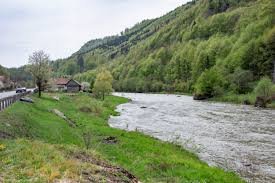 The upper course of the Mureș · The town grew up in the river valley
The age of log rafting — the town's economic golden age
The real economic boom of Toplița began around 1710, when log rafting started on the Mureș. This was no mere local industry — Toplița became one of the most important timber-trade and log-rafting centres of the upper Mureș valley.
Timber harvesting
The pine forests of the surrounding Călimani and Gurghiu Mountains offered an inexhaustible supply of raw material. Winter logging was followed by spring transport down the river.
Log rafting
The cut timber was bound into rafts and floated down on the swollen spring waters of the Mureș. Toplița was one of the first raft ports, where the shipments were assembled.
The Urmánczy fortune
The Urmánczy family had two raft ports at Toplița. The rafting income laid the foundations of the family fortune that later financed the chateau.
"Toplița lies on the banks of the Mureș, among the mountains, on the Gheorgheni side. It is the first port of log rafting."
György Rákóczi and the beginnings of spa culture
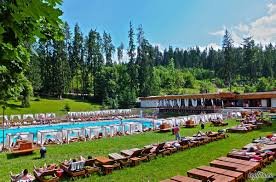 A Bánffy Bath — itt jártak az erdélyi fejedelmek is
The fame of Toplița's mesothermal mineral springs reached far beyond the small settlement already in the 17th century. György Rákóczi I, prince of Transylvania, visited the springs in person in 1638 — a visit recorded in an official document.
The dating of the prince's instruction sent to Mihály Siklósi has survived: "in Thermis Gyergyoiensibus" — that is, "from the warm baths of Gyergyó". This is the first documentary proof that the town's baths were already famous in the 17th century.
More than a century later, in 1762 General Adolf Nikolaus von Buccow, supreme commander of the Transylvanian army, also visited the healing springs. Toplița's past as a spa town is therefore continuous and four hundred years long.
Around the baths, the Bánffy and Urmánczy families developed the traditional spa resorts — the former held their springs for 720 years, while the latter bought theirs in 1870 from the Lázár family of Lăzarea (Szárhegy).
The Urmánczy family — the town's architectural engine
The Armenian-Hungarian Urmánczy family originated from around Lake Urmia in Iran and settled in Toplița at the beginning of the 19th century, between 1830–1836. During the 19th–20th centuries they played a part in almost every major building project in the town.
They began as general merchants and later bought up forests. They had two raft ports in Toplița. The timber-trade fortune laid the foundations for later building projects. Before Trianon they owned 10,000 hectares of forest.
Around 1870 they purchased the Urmánczy Bath from the Lázár counts of Lăzarea (Szárhegy) — the bath's earlier 1818 Lázár entrance thus passed to the new owners. By 1940 they had also built today's Olympic pool.
Jeromos Urmánczy had the chateau built from the proceeds of the sale of the Gheorgheni–Deda railway line. Architect: Virgilio Giacomuzzi, a Tyrolean architect. The only Art Nouveau chateau in Transylvania.
Nándor Urmánczy (1868–1940) was for sixteen years, between 1902 and 1918, the district's member of parliament — representing both Hungarian and Romanian residents equally. In 1918 he briefly served as government commissioner.
Famous natives
Toplița is the birthplace of a remarkable coincidence: in the same year — 1868 — two figures were born here who would later have a decisive impact on 20th-century Hungarian and Romanian politics.
Born in Toplița and buried here. Member of parliament for sixteen years (1902–1918). Founder and lifelong president of the "Ereklyés Országzászló" (Relic-bearing National Flag) movement — one of the key figures of post-Trianon Hungarian memory. He spent the end of his life in the water tower of the Urmánczy chateau.
Born Elie Cristea, the child of a peasant family. The first Orthodox patriarch of Romania (from 1925) and prime minister between 1938 and 1939 under King Carol II's decree government. Founder of the Saint Elijah monastery in Toplița (1928).
Toplița uniquely gave the first half of the 20th century both a Hungarian and a Romanian national key figure — Nándor Urmánczy became one of the engines of the Hungarian revisionist movement, while Miron Cristea became the modern leader of the Romanian Orthodox Church and a statesman.
From village to municipality
During the 20th century, Toplița rose gradually from village to town and then to municipality status. This evolution reflected the economic and cultural growth of the settlement.
The name Toplița
From 1 January 1907 the settlement officially bore the name Maroshévíz (today: Toplița). The earlier names were: Taplócza, Toplicza, Gyergyó-Toplicza and, from 1861, Oláh-Toplicza.
Trianon and the Romanian name
After the Treaty of Trianon, it became part of Romania. The new official name was Toplița Română. In 1910, of 7,388 inhabitants 4,194 were Romanian and 2,414 Hungarian.
Second Vienna Award
Through the 1940 Vienna Award, Northern Transylvania reverted to Hungary, together with Toplița. It remained under Hungarian rule until 1944, then returned to Romanian territory.
Town status granted
In the early years of the communist period, Toplița officially became a town. For a time it was part of the Hungarian Autonomous Region, and from 1968 it was assigned to Harghita County.
Municipality status
In 2002 it was raised to municipality status. Its population then was 15,880: 11,291 Romanians, 4,039 Hungarians, 486 Roma and 15 Germans. It is the regional centre of northern Harghita County.
Did you know?
Toplița is the birthplace of a remarkable coincidence: in 1868 two important figures were born here — Hungarian politician Nándor Urmánczy and Miron Cristea, the first Orthodox patriarch of Romania.
The town's name changed four times: Taplócza → Toplicza → Gyergyó-Toplicza → Oláh-Toplicza (1861) → Maroshévíz (1907) → Toplița Română (1918). Both the Hungarian and the Romanian name mean "warm spring".
In 1785, at the European census of Joseph II, 227 households were recorded in Toplița — most of them belonging to Baron János Bornemissza (52), Baron Simon Kemény (30) and Count Mihály Teleki (18).
Bloody battles took place in the area during World War I. 771 soldiers are buried at the Romanian memorial of Săcădate (Székpatak), and 450 soldiers at the Hungarian Heroes' Cemetery of Dealul Sacului (Zsákhegy) — all within an 800-metre radius.