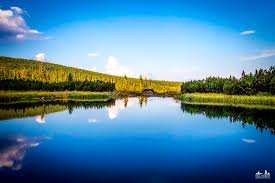
Iezerul Bánffy (Bánffy Tarn)
A triangular alpine lake at 1750 m altitude, at the foot of Răchitiș Peak —
an Ice Age legacy and post-volcanic heritage in the heart of the Călimani Mountains
Source: CNIPT Toplița
The jewel of the Călimani Mountains
Iezerul Bánffy — also known as Iezerul Răchitiș in Romanian and Jézer-tó in Hungarian — is one of the most remarkable natural formations of the Călimani Mountains, lying at 1750 m altitude, at the foot of the 2021 m Răchitiș Peak.
The lake is triangular in shape, with a surface of about 1300 m² (45×35 m) and a depth of 3–5 m. It is fed by two springs, and its waters flow into the Büdös (Pucioasa) Brook. Its surroundings are protected by a 322-hectare geological nature reserve, part of the Călimani National Park (24,041 ha).
The origin of the lake is still debated among geologists: some regard it as a Quaternary glacial relic, while others attribute its formation to a landslide caused by the kaolinisation of volcanic rock.
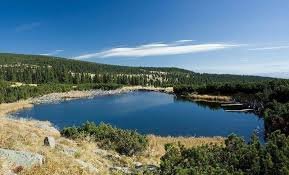 The triangular alpine lake at the foot of Răchitiș Peak · visitharghita.com
Protected plants and large wildlife
The surroundings of Iezerul Bánffy are one of the most valuable habitats of the Carpathians: glacial relict plant species, ancient Swiss pine stands and Europe's most impressive community of large carnivores live here in undisturbed wilderness.
Protected plant species
The area hosts mountain pine (Pinus mugo), Siberian juniper (Juniperus sibirica) and the protected Swiss pine. Patches of mat-grass (Nardus stricta) are characteristic.
Rhododendron splendour
From June to mid-July, the Carpathian rhododendron (Rhododendron kotschyi) blooms — a vivid pink carpet of flowers covers the lake's surroundings, one of the most beautiful natural spectacles of the Carpathians.
Home of large wildlife
In the undisturbed forests of the Călimani Mountains live the brown bear, wolf, lynx and European roe deer. The area is part of the UNESCO biosphere reserve.
The mystery of the "bottomless lake"
The origin of Iezerul Bánffy remains disputed to this day, and many legends surround it — including the tale of a lead duck said to have drifted from the lake's depths all the way to the Black Sea.
It would be the terminal-moraine remnant of the Quaternary glaciation — the rock debris formed an impermeable clay layer, allowing the lake to form in the wake of the melting glacier.
It would have formed through a landslide caused by the kaolinisation (clay weathering) of volcanic rock — a unique geological record of post-volcanic activity in the Carpathians.
The lake in pictures
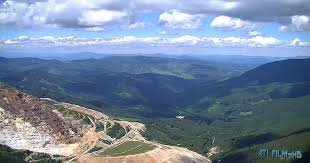
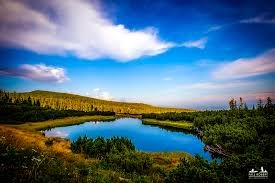
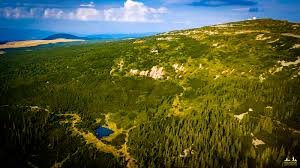
Photo sources: visitharghita.com · CNIPT Toplița · greenharghita.ro · Salvamont Harghita
Before you set out
Permitted activities
- Hiking on marked trails
- Nature photography and birdwatching
- Botanical observation (rhododendron bloom)
- Quiet rest and contemplation
- Geological-geographical study tour
Forbidden activities
- Bathing, fishing and boating are forbidden
- Lighting campfires is strictly forbidden
- Camping only at designated sites
- Picking plants and removing stones is forbidden
- Loud noise and drone use without permit are forbidden
How to get there
- From Toplița, via the Borsec exit
- Along the Lomaș Brook valley, about 20 km on a forest road
- From Forrás-mező (Poiana Izvoarelor) only on foot or by 4×4
- From Borsec: 20 km along the road to Toplița
- Hiking time: 4–6 hours round trip
- GPS: 47.0933° N, 25.2614° E
Bear safety
- The area is an active brown bear habitat
- Hiking only by day, in groups, is recommended
- Signal your presence loudly (music, conversation)
- Store food in airtight containers
- Emergency: Salvamont 0SALVAMONT (0725 826 668)
For protected nature — please be mindful!
Many natural treasures of Harghita County — including the thermal-water waterfall of Toplița — have unfortunately lost much of their original splendour in recent years due to visitor pressure, environmental neglect and the lack of proper management.
Iezerul Bánffy still retains its magical atmosphere today — precisely because it is harder to access and lies under the stricter protection of the Călimani National Park. Please take care of it: take with you what you brought in, and leave only memories behind. Protecting nature as the law requires is everyone's duty.
Did you know?
The lake was once called the "bottomless lake" — according to a legend, a lead duck was thrown into it and was found years later on the shore of the Black Sea.
Răchitiș Peak (2021 m), at whose foot the lake lies, is the second-highest volcanic peak of the Carpathians — only the neighbouring Pietrosul Călimanilor (2103 m) is taller.
The forests of the Călimani Mountains have been declared a UNESCO biosphere reserve — they shelter one of Europe's most valuable stocks of undisturbed virgin forest.
The lake's waters flow into the Büdös Brook (Pucioasa), whose name refers to the sulphurous gas emissions of post-volcanic activity — reminiscent of the mofettes of the Ciomatu Massif.