Mikó Castle and the Székely Museum of Ciuc
The best-preserved late-Renaissance, Italian-bastioned castle of the Székely Land — from its founding by Ferenc Mikó of Hidvég in 1623 to today's Székely Museum of Ciuc
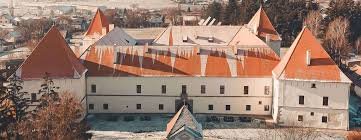
Mikó Castle (also known as Mikóújvár or Szeredavár) is the most important historical landmark of Miercurea Ciuc and the best-preserved late-Renaissance, Italian-bastioned castle in the entire Székely Land. The fortress, with its regular square ground plan, was built between 1623 and 1631 by Ferenc Mikó of Hidvég (1585–1635), the loyal counsellor of Prince Gábor Bethlen of Transylvania, supreme captain of the Ciuc, Giurgeu and Cașin Seats, and later treasurer of Transylvania.
The former castle was conceived primarily not as a defensive structure but as a representative noble residence. Although it was severely damaged by the Ottoman and Tatar incursions of the 17th century and the storms of the 1848–49 Revolution, the building has retained its original Renaissance character through several rebuildings. Since 1970 it has been home to the Székely Museum of Ciuc, which houses the richest ethnographic, historical and religious art collection in the region — more than 100,000 objects across various thematic collections.
Images of the castle and the museum
The building history
The birth of the Renaissance castle
In 1611, Gábor Bethlen, Prince of Transylvania, granted the estate to his loyal counsellor Ferenc Mikó of Hidvég, at the same time authorising the construction of a fortified residence. The supreme captain erected a manor house around 1613, and in the spring of 1623 began the construction of the castle that still stands today.
The works were most probably directed by Giacomo Resti, the Italian-born architect in Bethlen's service. The 70 × 75-metre, rectangular fortress is guarded at each corner by an old-Italian bastion. The building was completed in 1631 and served, above all, as a representative noble residence rather than for military purposes.
Destruction and rebuilding
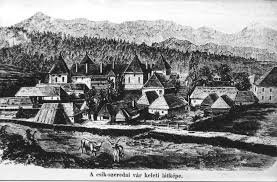
In 1661 the troops of Ali Pasha of Temesvár burned both Miercurea Ciuc and the castle. The building lay in ruins for decades, until between 1714 and 1716 the imperial general Count Stephan Steinville had it rebuilt on the orders of Emperor Charles III.
During the restoration the castle was transformed into a military strongpoint — preserving the Renaissance core but surrounded by an outer earthwork of palisades, with earthen bastions at the corners, a dry moat and a stone gate-tower equipped with a drawbridge. The stone gate-tower still stands today, at the end of the bridge crossing the moat.
Military barracks and border-guard headquarters
After its 18th-century rebuilding the castle served military functions without interruption: from 1764 it housed the staff of the first Székely border-guard infantry regiment, and later it operated as a barracks of the Honvéd army. During the Revolution of 1848–49 it served as the headquarters of Colonel Sándor Gál — the centre from which the armed resistance of the Székely Land was directed.
Its strategic importance was preserved during the Second World War as well. Until 1942 it housed the headquarters of the 32nd Border-Guard Battalion, which supervised the Uz and Csobányos valleys and the Ghimeș Pass. On 2 November 1942 the headquarters of the 3rd Border-Guard Brigade was also relocated to Mikó Castle from Gheorgheni — and right up until the autumn of 1944, the border defence of the region was commanded from here.
The comprehensive restoration
During the tenure of Kelemen Hunor as Minister of Culture, funded by the ministry, the comprehensive restoration of Mikó Castle was carried out between 2010 and 2013. As a result, the castle regained its former lustre and splendour, was complemented with modern exhibition spaces, and at the same time preserved its 400-year architectural heritage.
In 2024 archaeological excavations were launched in the surrounding area: the plans foresee the restoration of the triple defence system — including the rampart, ditch and outer wall — to make the visitors' experience even more authentic.
The historical role of the castle
1773 — Visit of Joseph II
Emperor Joseph II visited Mikó Castle in person, describing in his diary, in great detail, the four-bastioned castle.
1764 — The Siculeni Massacre
During the forced organisation of the Székely border guard, Székelys who refused to enlist as border guards were brought here to be coerced into submission.
1849 — Headquarters of Sándor Gál
During the Revolution of 1848–49 the castle served as the headquarters of Sándor Gál — promoted to colonel by General Bem — and was the centre of the armed resistance of the Székely Land.
1942 — Border-guard headquarters
The headquarters of the 32nd Border-Guard Battalion, and from 2 November 1942 of the 3rd Border-Guard Brigade, operated here — commanding the border defence of the Ghimeș Pass and the Uz valley until the autumn of 1944.
1930 — Founding of the museum
The teacher Pál Péter Domokos, together with the painters Imre Nagy and Géza Vámszer, founded the Association of the Székely Museum of Ciuc. The first exhibition opened in 1931 at Pentecost.
1968–1970 — County museum and move into the castle
In 1968, the year of the founding of Harghita County, the institution was reorganised as the county museum, and after extensive restoration it was moved permanently into Mikó Castle in 1970.
Mikó Castle, beyond its architectural value, is a striking example of the cohesion of the Transylvanian Hungarian community and of its built and cultural heritage — the castle in the heart of the Székely Land is today home to a museum showcasing Székely culture and traditional treasures.
Exhibitions of the Székely Museum of Ciuc
The museum holds more than 100,000 objects, including 65,537 archaeological and 8,675 ethnographic items, 5,758 old books from the Franciscan collection of Șumuleu Ciuc, and the 6,271-piece bequest of the painter Imre Nagy. The collections present the history of the Ciuc region, Székely folk culture and the religious art heritage of the area.
History of Mikó Castle
A permanent exhibition since 2011 — presenting four centuries of the castle's building history, period weaponry and the lives of the dignitaries who resided here.
The passing of time in Ciuc
Folk life scenes from everyday Ciuc — an exhibition open since 2014, showcasing traditional Székely lifestyles and crafts.
The Franciscan printing press of Șumuleu Ciuc
Open since 2001 — the tools and publications of one of Transylvania's oldest printing presses, including the works of János Kájoni.
Our rescued sacred treasures
An outstanding collection of religious art objects, paintings and statues saved from the region's churches.
Székely gate open-air museum
An imposing open-air exhibition in the castle courtyard — 7 wooden houses and 15 Székely gates showcasing rural Székely architecture.
Miercurea Ciuc Early Music Festival
A prestigious musical event held every summer in the castle courtyard, bringing Baroque and Renaissance music to its visitors.
Useful information
Address
Castle Square no. 2
530132 Miercurea Ciuc, Harghita County
Access: Petőfi Sándor Street, Dózsa György Street, Nicolae Bălcescu Street
Admission
- Full price: 15 lei
- Students, pensioners: 10 lei
- Pupils: 7 lei
- Family ticket: 35 lei
- Courtyard admission: 3 lei
Group tickets (15+ persons)
- Adult: 10 lei / person
- Pupil: 5 lei / person
Prices are indicative — it is advisable to check the museum's official website before your visit.
Official contact
Web: csikimuzeum.ro
Facebook: Székely Museum of Ciuc
Detailed opening hours and current exhibitions are available on the official website.
Getting there and around
Mikó Castle is located in the east-central part of Miercurea Ciuc, on the territory of the former Mărtănuș district — within walking distance of both the town centre and the railway station. It can be approached from several directions: from Petőfi Sándor Street, Dózsa György Street and Nicolae Bălcescu Street. For those arriving by car, several free and paid parking spaces are available nearby.
The visit can easily be combined with other Miercurea Ciuc attractions: the town centre, the Holy Cross Church, the nearby Franciscan Pilgrimage Church of Șumuleu Ciuc and the healing springs of Băile Jigodin.
Discover the other treasures of Miercurea Ciuc!
After Mikó Castle, get to know the town's other attractions — the pilgrimage church of Șumuleu Ciuc, the healing springs of Băile Jigodin and the hiking trails of the Harghita Mountains.