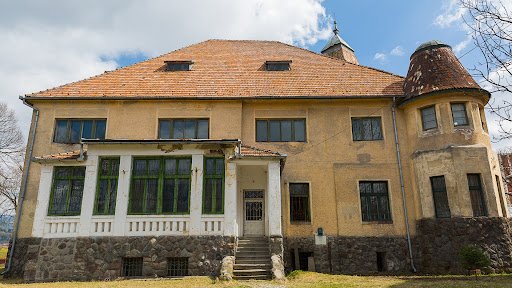
Urmánczy Castle
A 120-year-old Art Nouveau monument on the bank of the Mureș — the legacy of Jeromos Urmánczy,
now being restored through a 22-million-lei PNRR project
Source: Positive Transylvania Association
Transylvania's unique Art Nouveau castle
The Urmánczy Castle is the architectural gem of Toplița — and the only Art Nouveau-style castle unique to Transylvanian architecture. It rises on the bank of the Mureș in a 4,348 m² landscape park, still preserving the former glory of the Urmánczy family of Armenian origin.
The castle was built between 1903 and 1906 by the landowner Jeromos Urmánczy, designed by the Tyrolean-born architect Virgilio Giacomuzzi. Its style blends Art Nouveau with the folk architectural tradition made famous by Károly Kós — a distinctive and unique mix within Transylvanian castle architecture.
Its dominant feature is the helmet-roofed water tower at the right corner of the main facade, known as the favourite retreat of the politician Nándor Urmánczy — he also died there in 1940. The castle was officially declared a historic monument in 2019 and is currently being restored through a 22-million-lei PNRR project.
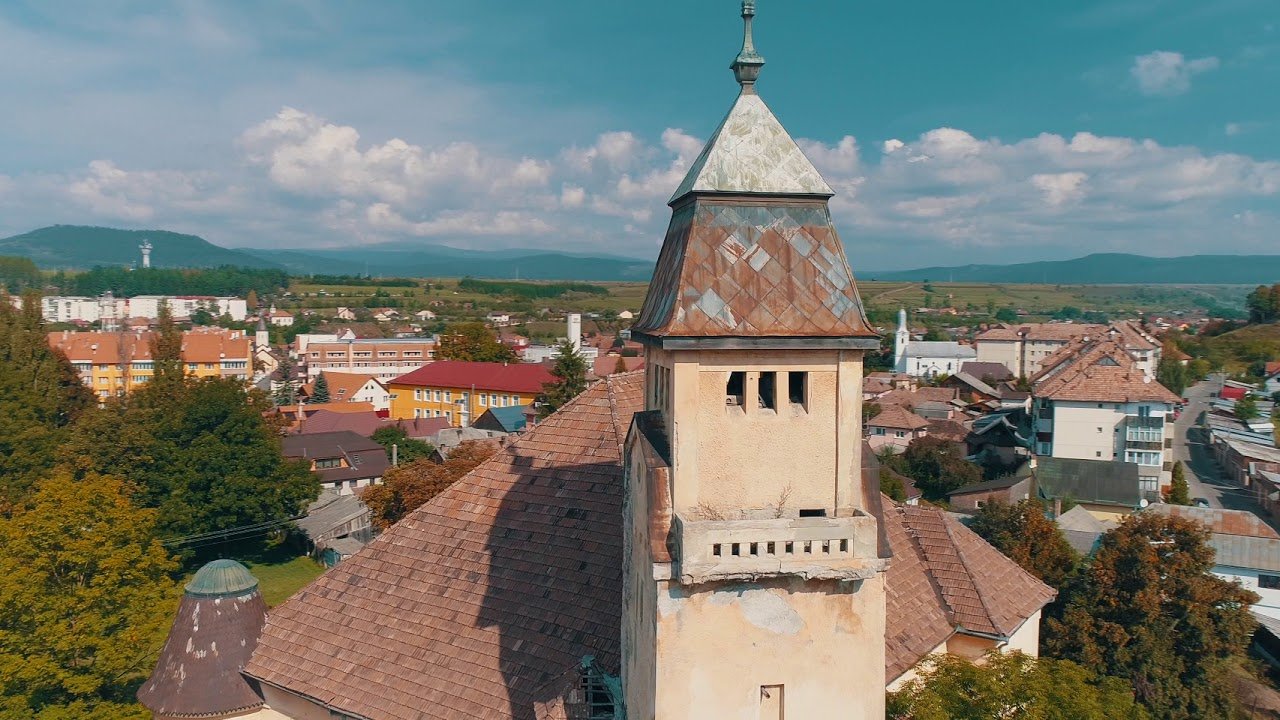 The castle with its water tower · urmanczycastle.ro
The castle's unique features
The Urmánczy Castle's style is unparalleled in Transylvania: it merges Viennese-European Art Nouveau elegance with the Transylvanian folk-architectural tradition shaped by Károly Kós. Every detail of the castle is the result of deliberate design — from the stone to the facade.
Water tower
The helmet-roofed water tower at the right corner of the main facade is the castle's most striking element. A four-storey, square-plan structure rising on rough-stone columns — which also supplied a stored water reserve.
Tárnica quarry
The castle's stones came from the Urmánczy family's Tárnica quarry. Loaded wagons slid down rails on the hillside while empty ones were pulled up on the opposite side — an ingenious solution.
Green and white facade
The facades are painted with green noble plaster, while the architectural elements are picked out in white Art Nouveau stucco. The main facade's windows, the small balcony's parapet and the corner turret are all framed in white.
120 years of the castle
The castle's story takes in the flourishing of Transylvanian noble life, the trials of nationalisation, decay and the rebirth unfolding today.
Jeromos Urmánczy built the castle with the money obtained from selling the Gheorgheni–Deda section of the Szekler ring railway. The designer was the Tyrolean architect Virgilio Giacomuzzi, who left Art Nouveau traces across Transylvania.
Soon after construction was completed, during the First World War it became the headquarters of the 14th Division of the Romanian Army. The war ended the castle's peaceful, aristocratic chapter.
The communist regime nationalised it in 1948. For a time the army used it, then from 1963 the castle and its outbuildings (riding hall, steward's house, water-pump house) were turned into a hospital.
The town hospital built alongside hid the castle's main facade, and the building was left without a function. Apartment blocks and an administrative building were put up in the park — a wound in the surroundings to this day.
In 2009 the Urmánczy descendants got it back, but they could only take actual possession in 2013. The Positive Transylvania Association, founded in 2017, took on the upkeep and the push for restoration.
Thanks to the 22-million-lei PNRR grant (≈4.4 million euros), full restoration has begun. The target is mid-2026 — an exhibition space, cultural café, conference room and tower-top viewpoint will welcome visitors.
The castle in pictures
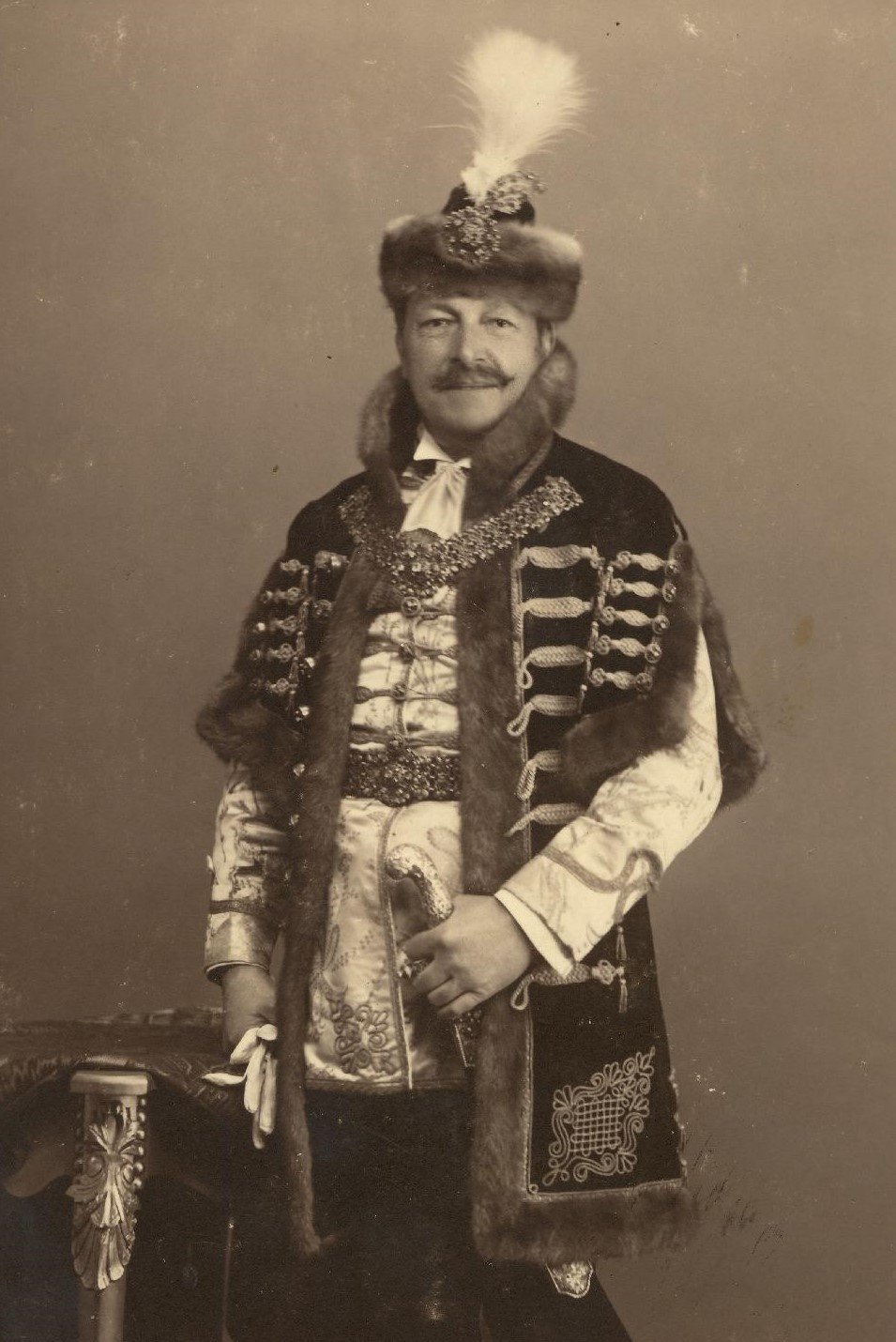
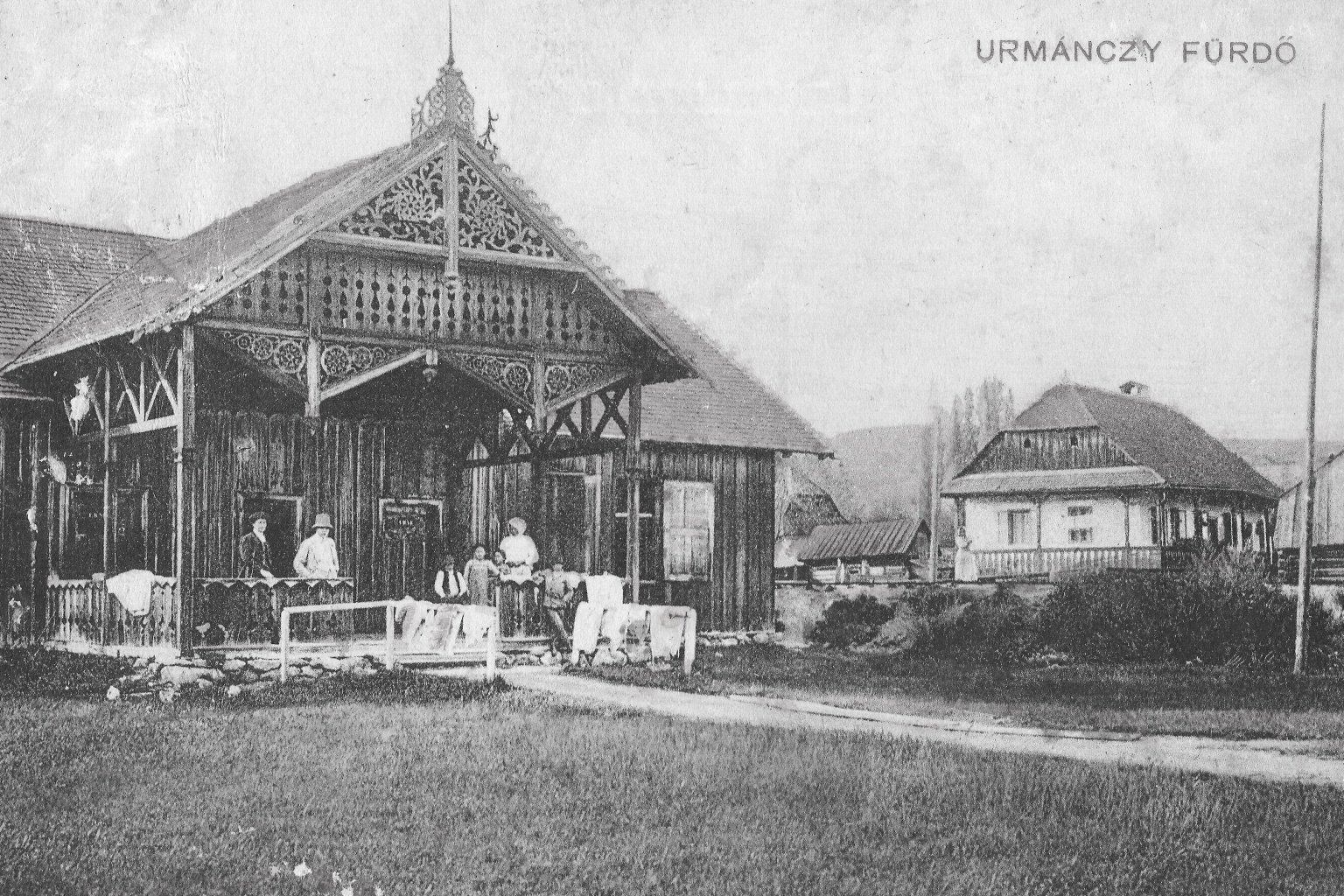
Photo sources: urmanczycastle.ro · Positive Transylvania Association · local sources
What will the castle host from 2026?
After the 22-million-lei restoration, the castle will operate not as a museum but as a living cultural centre. The ground floor, upper floor, tower and basement will each be given new functions.
It will house an events hall, an exhibition space and a cultural café. Lectures, concerts and cultural events will be held here — it will become a living meeting point for the culture of Toplița and the surrounding area.
The castle's water tower will be made accessible by a spiral staircase, and from its top an unrivalled view will open over the Mureș valley and the outline of the Călimani Mountains. A new tourist attraction is born.
A conference room, a space for museum-education workshops and a kitchen will be set up. The basement will bring together the scientific, educational and gastronomic functions.
The current entrance is at the rear, which is not ideal. After restoration, a new entrance will open towards the town centre, making the castle more easily accessible to visitors.
Before you set out
Under restoration!
- The castle is currently under restoration
- Full restoration runs from 2024 to 2026
- Interior visits are currently restricted
- Exterior viewing remains possible
- Opening: mid-2026 (planned)
Useful information
- Address: on the bank of the Mureș, centre of Toplița
- Operator: Positive Transylvania Association
- Admission: by donation (for the restoration)
- Facebook: Castelul Urmánczy kastély
- Web: urmanczycastle.ro
Getting there
- From the centre of Toplița: 5-minute walk
- From Miercurea Ciuc: DN12 (92 km)
- From Borsec: DN15 (24 km)
- From the railway station: about 10 minutes' walk
- GPS: ~46.9173° N, 25.3457° E
How can you support?
- Donations through the Positive Transylvania Association
- Visiting during European Heritage Days
- Trying the escape room (on site)
- Online sharing and promotion
- Volunteering at on-site events
Did you know?
The family financed construction by selling the roughly 50 km section of the Szekler ring railway between Gheorgheni and Deda — a railway fortune turned into an architectural masterpiece.
The road leading to the castle was once flanked by a wrought-iron gate nearly 4 metres tall, guarded by two large stone lions — sadly it no longer exists, having vanished during nationalisation.
There were nine rooms on the ground floor, the most elegant being the hunting hall. The walls were hung with portraits of great Hungarian historical figures — Rákóczi, Kossuth — for as long as the family lived in the castle.
During the 2024 restoration works, a serious fungal infestation was discovered in the castle — wet rot fungus had taken hold. This significantly slowed and prolonged the restoration work.