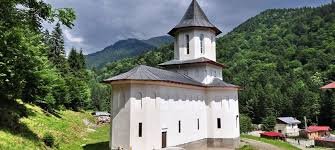
Saint Elijah the Prophet Wooden Church and Monastery
A masterpiece of Moldavian folk architecture in the Toplița monastery —
1847 wooden church and 1928 foundation of Patriarch Miron Cristea
Forrás: virtualisszekelyfold.ro
Spiritual peace at the foot of the mountains
The Saint Elijah the Prophet Monastery in Toplița lies at the foot of the Călimani Mountains — at once an architectural, historical and spiritual treasure. The monastery's most striking and valuable building is the listed wooden church, built in 1847 in nearby Stânceni and moved to its present location in 1910.
The wooden church is a masterpiece of Moldavian folk architecture: it was built in 1847 by the priest Gheorghe Ujica and his sons Ioan and Ștefan and still preserves the original frescoes from the same year — painted by master Gligorie of Târgul Pietrei from Piatra-Neamț.
The monastery's second foundation is associated with Patriarch Miron Cristea, who established the monastic community in 1928. Cristea (1868–1939), born in Toplița, became the first Romanian Orthodox Patriarch and also served as Prime Minister of Romania in 1938–1939.
 The carved porch entrance of the wooden church · virtualisszekelyfold.ro
A masterpiece of the Moldavian craftsmen
The wooden church is one of the finest surviving examples of 19th-century Moldavian folk church architecture in Transylvania. Every detail — the porch-like entrance, the wooden arches, the carved columns — preserves the traditional solutions of Moldavian craftsmen.
Carved entrance porch
On the church's south side stands a porch-like entrance decorated with arches resting on carved columns. Above it rises a small tower — a characteristic Moldavian solution.
Pentagonal sanctuary
The sanctuary walls form a pentagon covered by an octagonal vault. The nave's vault is half-cylindrical, oriented east-west, resting on an octagonal base.
1847 frescoes
On the vaults still survive the original wall paintings from 1847, painted by master Gligorie of Târgul Pietrei from Piatra-Neamț. The paintings are unique testimonies of Moldavian religious art.
The history of the wooden church and the monastery
The wooden church's history is tied to two places: the original community of Stânceni, where it was built in 1847, and the Toplița monastery, where it was moved in 1910.
The wooden church was built by the priest Gheorghe Ujica and his sons Ioan and Ștefan at Stânceni (Hungarian: Gödemesterháza). The frescoes date from the same year and are the work of master Gligorie of Târgul Pietrei.
The Stânceni community built a stone church as the wooden one had become too small. The old wooden church was then moved to Toplița, marking the beginning of the local monastery's history.
The monastery was founded by Patriarch Miron Cristea, a native of Toplița. The abbot's residence, built in 1928, still stands today. The monastery was initially placed under the direct jurisdiction of the Romanian Patriarchate.
Two major waves of restoration and building took place: in 1975–1976 and in 1985–1990. During these years, the monastery was extended with new buildings while the wooden church's original state was preserved.
Miron Cristea (1868–1939)
The monastery's founder, Elie (monastic name Miron) Cristea, was born in Toplița into a peasant family and rose during his lifetime to Romania's two highest offices: patriarch and prime minister.
He was born in Toplița on 20 July 1868, the son of Gheorghe and Domnița Cristea. His birth name was Elie Cristea. A gifted young man, he set out on the Orthodox ecclesiastical path — first becoming a bishop in Transylvania under Hungarian rule, then in 1919 the first metropolitan of the Orthodox Church of united Romania.
In 1925 he became Romania's first Orthodox Patriarch, when the Church was raised to the rank of patriarchate. From February 1938 to March 1939 — until his death — he served as Prime Minister of Romania under King Carol II's royal dictatorship. He died in Cannes on 6 March 1939.
The monastery in pictures
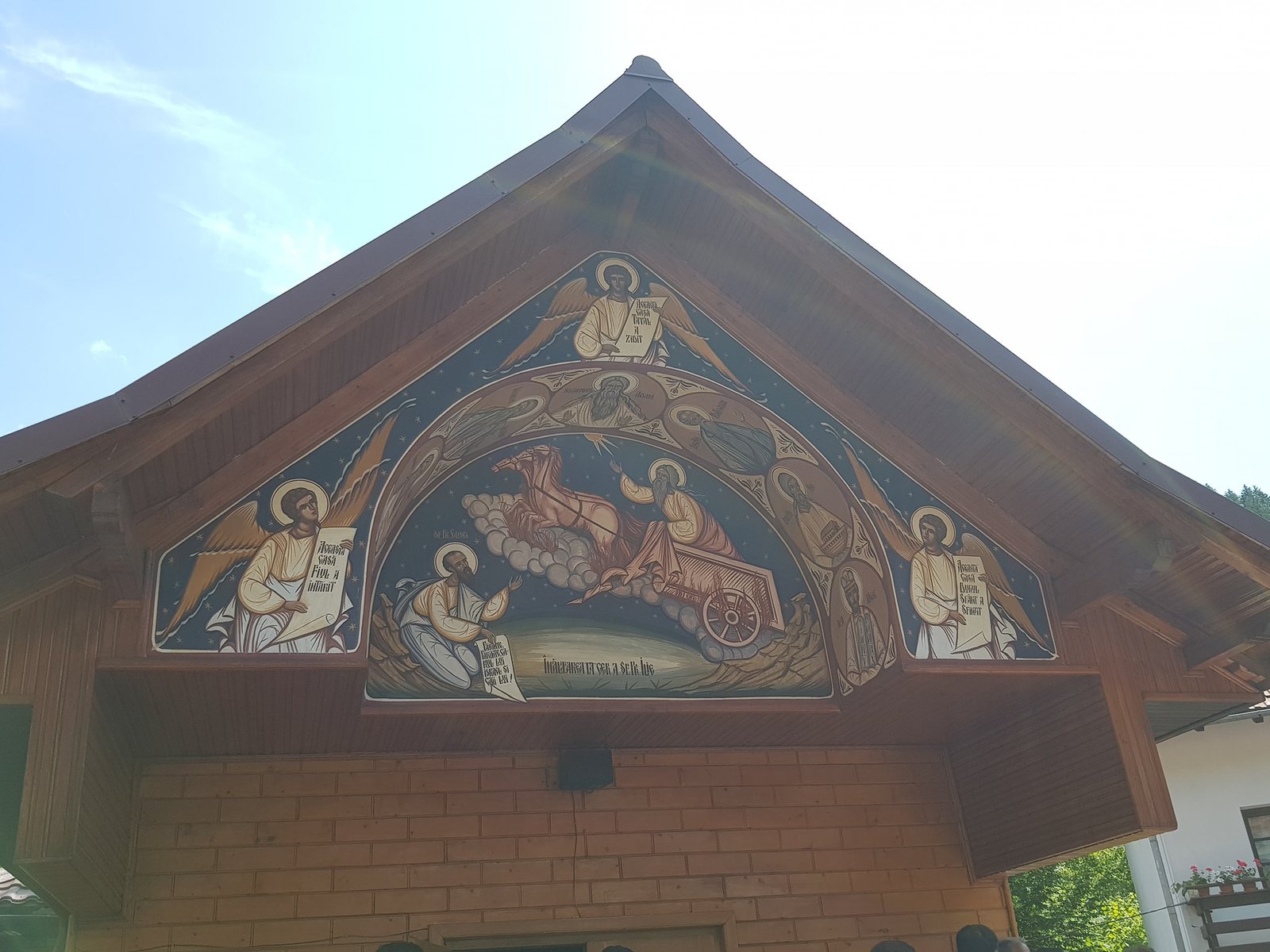
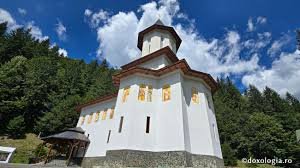
Photo sources: virtualisszekelyfold.ro · lelepo.hu · local sourceok
Before you set out
What can you see?
- 1847 wooden church (HR listed monument)
- Original 19th-century frescoes
- Carved entrance porch
- The abbot's residence (1928)
- Panorama of the Călimani Mountains
Useful information
- Address: Toplița, at the foot of the Călimani Mountains
- Diocese: Orthodox Diocese of Covasna-Harghita
- Feast of Saint Elijah: 20 July
- Entry: free, donations welcome
- Please keep silence and show respect
How to get there
- From Toplița centre: 5–10 minutes by car
- From Miercurea Ciuc: DN12 (92 km)
- From Borsec: DN15 (24 km)
- Reachable on foot from the edge of town
- GPS: ~46.929° N, 25.353° E
Good to know
- Active Orthodox monastery — monastic life ongoing
- Inside the church silence must be kept
- Indoor photography only with permission
- Decent attire recommended (shoulders and knees covered)
- Visiting during services is not recommended
Did you know?
The wooden church was not built here, but 63 kilometres away, at Stânceni in 1847. From there it was moved to Toplița in 1910 — relocating an entire wooden building was a remarkable scientific and architectural feat of the time.
The founder of the monastery, Patriarch Miron Cristea, was born right here in Toplița. He was Romania's first Orthodox Patriarch and also her Prime Minister — one of the most influential Romanian figures of the 20th century.
Inside the church one can see 178-year-old frescoes — the work of master Gligorie of Târgul Pietrei from Piatra-Neamț. These frescoes are uniquely rare witnesses of Moldavian religious painting, preserved to this day in their original state.
The church's monument code is HR-II-m-A-12989. Among Harghita County's listed monuments it is of outstanding importance, ranked in category A — also a significant piece of Romania's Orthodox heritage.