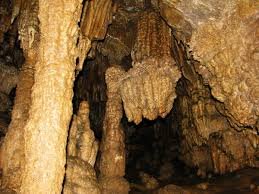
Șugău Cave
A 1,021-metre-long, four-storey passage system on the outskirts of Valea Strâmbă —
a 65-million-year-old world of stalactites, bats and mysterious legends deep within Sipoș Rock.
Source: local sources
The "whispering" cave deep within Sipoș Rock
The Șugău Cave (Hungarian Súgó-barlang) is the most important cave of the Gheorgheni Basin and one of the finest stalactite caves of the Eastern Carpathians. It is also known as the "Valea Strâmbă Șugău Cave" — it lies on the edge of Valea Strâmbă village, in the south-western spur of the 1,600-metre-high Sipoș Rock.
The name probably comes from the whispering, rustling sound created by the fast air currents in the passages and the murmur of the water — hence the Hungarian name "súgó" (whisperer). This atmosphere can still be sensed today if visitors listen carefully in the silence.
The cave and its 17-19 hectare surroundings form a protected reserve, managed since February 2006 by the Lacu Roșu Adventure Association. The continuously explored 1,021-metre-long passage system is a four-storey system — three dry levels and one active level with a stream.
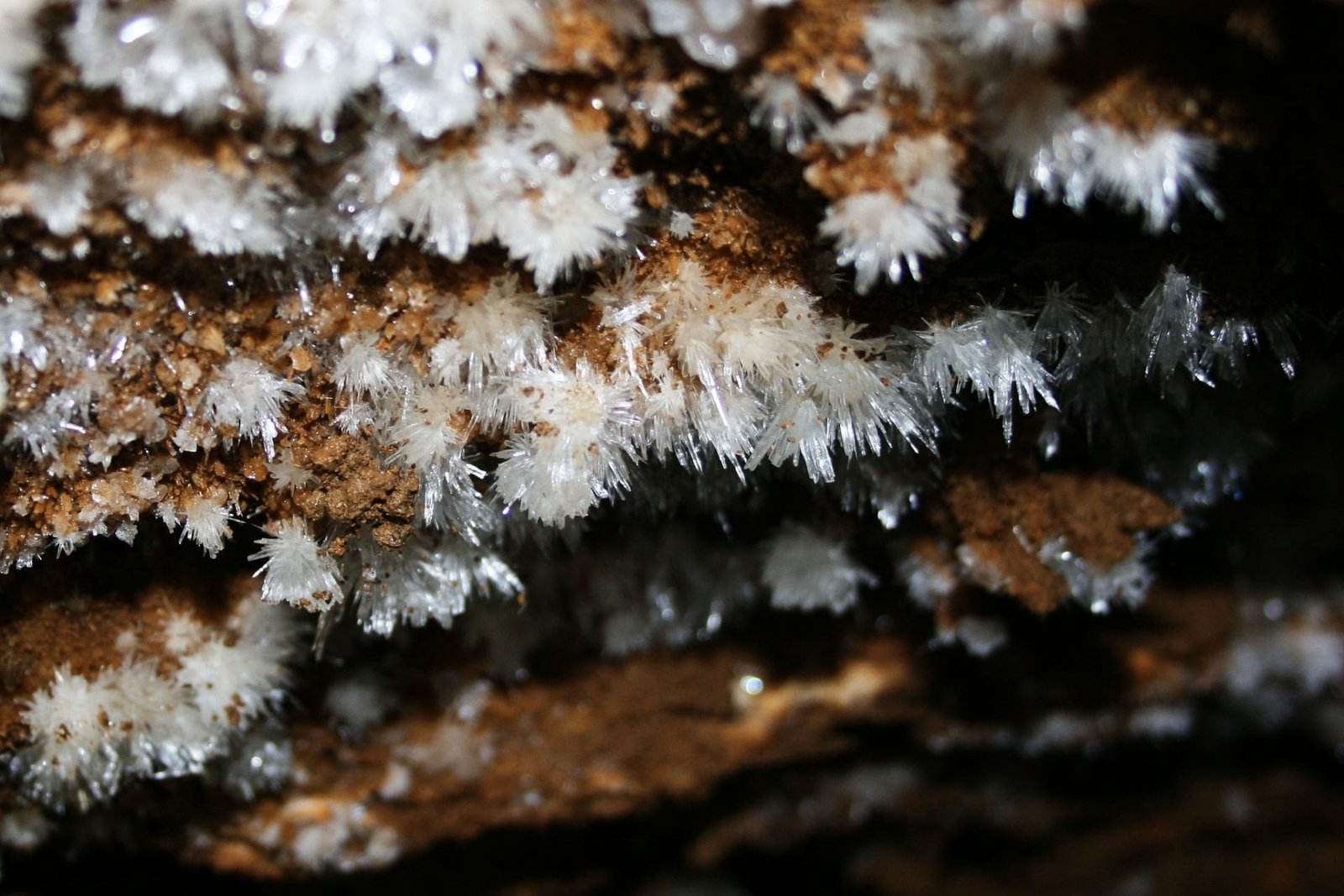 Crystal-white stalactite formations deep within the cave · local source
Levels of the cave
Șugău Cave is a unique four-storey passage system: the upper three levels are dry, while the lowest is active, with a karst-spring stream flowing through it. Tourists can visit only the upper, developed gallery.
Main passage (upper, tourist)
The developed, concrete-walkway section open to visitors, about 300 metres long. Here lies the Explorers Hall, where visitors can admire the cave's varied stalactite treasures.
Overflow branch (crawl passage)
A section offered to adventure seekers, requiring overalls and equipment. Here one progresses through narrow, climbable passages — a true caving experience.
Crystal corridor of the Great Hall
The cave's deepest point: a 300-metre section with an 8-metre drop. Here the stalactite world is at its most beautiful — accessible only by organised, guided tour.
Wonders woven from stone
The stalactite formations of Șugău Cave have taken shape over millions of years. Water dissolved them from the limestone, then re-formed the rock drop by drop — into extraordinary shapes.
Stalagmites and stalactites
The cave's classic ornaments: stalactites hanging from the ceiling and stalagmites rising from the floor. In places they have fused together into columns.
Pagodas and jellyfish
Pagoda-shaped stalactites and jellyfish-like formations make the cave unique. Each piece is the result of the slow work of millennia.
Pisolitic "mace" formations
One of the cave's rarest formations: the pisolitic mace shapes. Tiny, spherical calcite grains coat their surface, as if the stone had been embroidered.
Bats and secret inhabitants
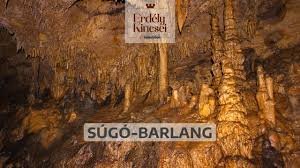 The cave's inner world · local source
Despite the harsh conditions in Șugău Cave, the wildlife is remarkably varied. The 95% humidity and 7-9 °C temperature create a unique habitat.
Five bat species live in the cave:
🦇 Common bent-wing bat (the most frequent) · common bat · lesser horseshoe bat · brown long-eared bat · Schreibers's bat. Alongside them, numerous insect and springtail species have also made the cave their home.
On the surface, all vegetation and wildlife are protected. Of particular value is the Lady's Slipper (Cypripedium calceolus), a rare protected orchid species found in the cave's surroundings.
From discovery to tourism
Local people had known about the cave for hundreds of years, but its scientific exploration only began in the 20th century. Since then, mapping and the development of visitor facilities have proceeded in stages.
Paleocene era — the cave's formation
It formed during folding movements about 65 million years ago in the dolomitic and crystalline limestone mass of Sipoș Rock. The water-dissolution process began along tectonic fissures and faults.
First explorations
In the 1930s, local tourists, mainly treasure hunters, began to explore it — Ákos Romfeld Sr. and József Kémenes walked the cave and came upon cave-bear (Ursus spelaeus) bones, which were taken to the Cluj museum.
First printed mention
Dr. Andor Csibi, in his work "Monograph and Guide of the Lacu Roșu Climatic Resort", mentions the cave as an important attraction of the town's surroundings.
Start of systematic exploration
With the support of the Gheorgheni museum, the amateur "Bányai János" caving group began its work — Ferenc Gereöffy, Oszkár Benedek and their colleagues explored and mapped the passages.
Construction of the shelter
For further exploration and visitation, the shelter still visible today was built next to the cave. The first map of the upper passages was also produced at this time.
Custody of the Lacu Roșu Adventure Association
From February, the Lacu Roșu Adventure Association became the official custodian and operator of the cave and its surroundings. Since then, the cave can be visited on organised, guided tours.
Legends and tales
Several legends from local tradition are attached to Șugău Cave. The Székely Legendarium has also adapted them — so the cave is not only a natural but also a cultural treasure.
The legend of the golden drops
According to tradition, in Șugău Cave gold drips from the ceiling — filling three buckets every seven years with the precious metal. This belief still lives in oral tradition and has drawn many treasure hunters to the cave over the decades.
The "whispering" name
The cave probably owes its name to the fast and constant air currents in its passages and to the murmur of the water — together these produce a whispering, rustling sound. The Hungarian word "súgó" comes from the verb "suttog" (to whisper).
The cave in pictures
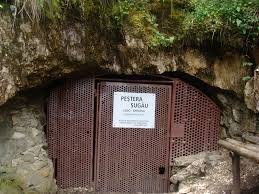
Photo sources: local sources
Before you set out
Opening hours
- 1 July – 1 September: daily
- Except Mondays, 10:00–17:00
- 1 Sept. – 30 Jun.: at weekends
- Advance booking required!
- Tour length: 40-50 minutes
Admission
- Adult: 15 lei / person
- Student, child: 10 lei / person
- Guided tours only
- Phone: +40 (0)744 701 815
- Web: sugocave.ro
How to get there
- Between Voșlăbeni and Valea Strâmbă
- From Gheorgheni: about 20 km
- From Miercurea Ciuc: road DN12
- The forest road is preceded by a gravel section
- Parking in front of the cave
Equipment
- Warm layer (7-9 °C in the cave)
- Hiking boots or trainers (clayey, wet ground)
- Headlamps are provided
- Liability waiver required
- Accident insurance recommended
Did you know?
In the cave, the air contains more carbon dioxide than outside — creating a special habitat for the insects, bats and springtails living here. The 95% humidity is constant.
In the 1930s, researchers found cave-bear (Ursus spelaeus) bones in Șugău Cave — traces of a species that went extinct tens of thousands of years ago. The bones are today kept in the Cluj museum.
Șugău Cave is a peculiar geological feature: the surrounding Sipoș peaks are not made of limestone but of crystalline schists — wedged among them lies the dolomitic limestone layer in which the cave formed.
The cave can be visited not only in summer: from September to June it is also open at weekends by prior arrangement. The interior temperature of 7-9 °C remains constant year-round — warmer in winter, cooler in summer.