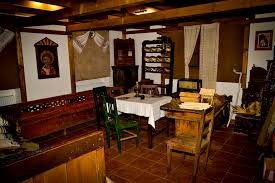
Toplița Folk Art Museum
A journey through the past, the everyday life and the festivals of the local community —
270 m² presenting the rich ethnographic heritage of the Upper Mureș Valley
Source: Toplița Cultural Centre
A journey back to the roots of the local community
The Toplița Folk Art Museum is more than an exhibition space — it is a journey through the past of the local community, its everyday life and celebrations. Founded in 1998 and reorganised in 2006, the institution operates as part of the Toplița Cultural Centre (Centrul Cultural Toplița).
The museum opened during the first "Miron Cristea Days", with Professor Dorel Marc and other local scholars among its founding members. The institution works closely with the folk ensemble "Rapsodia Călimanilor" (Călimani Rhapsody) to keep traditions alive.
The 270 m² exhibition space comprises five rooms and a foyer. Visitors follow a circular route through the displays, centred on the theme "The Thread of Life" — portraying the life of an ordinary person from the region, from birth to death, complemented by photographs and folk wisdom.
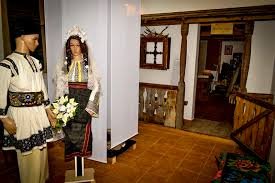 The museum’s interior halls and ethnographic collections · Centrul Cultural Toplița
Walk through the museum
The museum is explored along the circular route called "Old Man Nucu’s path" (Pe drumul lui moș Nucu) — each room reveals a different facet of the folk life, art and culture of the Upper Mureș Valley.
The Craftsmen’s Room
The small entry room where visitors first encounter the museum’s logo ("Old Man Nucu’s path"). The circular route of the exhibition begins here, welcoming guests into the world of ethnographic experience.
The Thread of Life
The central theme and flagship exhibit of the museum. It portrays the life of an ordinary person from the Upper Mureș Valley, from birth to death, age by age, completed with photographs and folk wisdom.
Folk costume room
In a dedicated room you can admire authentic folk costumes from the Upper Mureș Valley — for women and men, for everyday wear and for festive occasions. Comparative examples of different decorative techniques help visitors understand the tradition.
Musical instruments exhibit
In the stairwell stand the traditional instruments: wind instruments, mandolins, violins, cimbalom and double bass. The collection is closely tied to the spirit of the "Rapsodia Călimanilor" folk ensemble.
Old schoolroom
A special room that recreates the furnishings of an old schoolroom — with desks, a slate board and period teaching aids. A memorial to popular education at the turn of the 19th and 20th centuries.
Fine arts gallery
A plastic arts room and gallery that also displays works by students of the Folk Art School (Școala Populară de Arte) — a living bridge between past and present.
What can you see in the exhibition?
The museum’s collection brings together objects gathered over the years from the villages around Toplița — household, decorative and working tools that tell the story of the region’s crafts and folk art.
Colourful weavings, richly patterned embroideries and lace — the jewels of folk art from the Upper Mureș Valley. The variety of textiles and the diversity of decorative motifs remain a captivating sight to this day.
From the oldest farming tools to those made of more modern materials — the exhibition shows the evolution of traditional peasant agriculture in the region.
Icons and priestly vestments (veșminte preoțești) illustrate the region’s rich religious tradition. Decorative objects in wood and ceramics are also part of the collection.
On display are traditional peasant working machines for yarn processing, agricultural products and wood, metal and ceramic work — a unique collection of rural industry.
The museum in pictures
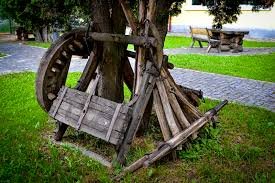
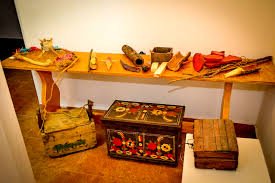
Photo sources: centrulculturaltoplita.ro · primariatoplita.ro · local sources
Before you set out
What can you see?
- 5 different themed rooms
- The central exhibit "The Thread of Life"
- Authentic Upper Mureș Valley folk costume
- Traditional instruments (cimbalom, violin...)
- Old schoolroom and gallery
Useful information
- Address: Bulevardul Nicolae Bălcescu 55-57
- Phone: +40 266 341 848
- Email: arc_top1@yahoo.com
- Web: centrulculturaltoplita.ro
- Operator: Toplița Cultural Centre
Getting there
- In the centre of Toplița
- From Miercurea Ciuc: DN12 (92 km)
- From Borsec: DN15 (24 km)
- From Târgu Mureș: DN15 (100 km)
- From the railway station: walking distance
Good to know
- Opening hours: by appointment (call the phone number)
- Groups can request guided tours
- Entry fee: check on site!
- Especially recommended for pupils and children
- Museum education workshops are also available
Did you know?
The museum opened in 1998 during the first "Miron Cristea Days" — connecting both to one of the town’s most famous sons (Patriarch Cristea) and to the discovery of local cultural treasures.
The museum’s logo — "Old Man Nucu’s path" ("Pe drumul lui moș Nucu") — is a symbolic figure who guides the visitor through the layers of life in the Upper Mureș Valley. The starting point is the "Craftsmen’s Room".
Alongside the museum operates the folk ensemble "Rapsodia Călimanilor" (Călimani Rhapsody) — in addition to the exhibitions, live folk-music programmes welcome visitors on major feast days.
The gallery room also hosts the creative work of students from the Toplița Folk Art School (Școala Populară de Arte) — forging a living link between the folk art of the past and today’s creators.