Upper Mureș
The 40 km gorge of the Mureș river between the Călimani and Gurghiu Mountains —
picturesque cliffs, a winding railway and the landscape of Wass Albert's novel
Source: terjhazavandor.ro
The Mureș breaking through the mountains
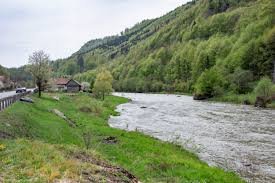
The Upper Mureș — also known as the Upper Mureș Gorge or the Mureș Gorge — is one of Transylvania's most spectacular river valleys, winding through the mountains for some 40 kilometres between Toplița and Deda.
Here the river carved its way between the Călimani and Gurghiu Mountains, creating a winding gorge framed by cliffs. The gorge has been officially protected since 2000 and is known today as the "Mureș Gorge Nature Park".
The gorge is followed by the DN15 main road and railway line 400, which reach the Deda area through tunnels, rock-cut sections and bridges. A drive or train ride here is an experience in itself — like the Olt Valley, the gorge is a masterpiece of Transylvanian railway engineering.
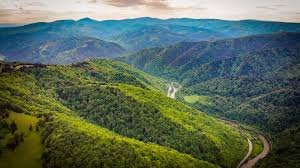 The gorge winds through the mountains · terjhazavandor.ro
A string of villages along the Mureș
On the stretch between Toplița and Deda, six picturesque mountain settlements nestle among the peaks — each has preserved its traditional character, with wooden and stone houses, small churches and local farming.
Stânceni · Lunca Bradului
The first settlements in the gorge after Toplița, both with a historic past of logging and rafting. Stânceni was one of the main stations during the construction of the Upper Mureș railway.
Răstolița · Androneasa
Two villages surrounded by spruce forests in the middle section of the gorge — key settings of Wass Albert's novel "The Witch of Funtinel".
Deda · Bistra Mureșului
The western gate of the gorge, where the Mureș leaves the mountains and enters the Upper Mureș Valley. From here the river begins its long journey towards the Transylvanian Plain.
Cliffs, caves and wilderness
The gorge is extremely valuable both geologically and biologically — which is why it was placed under protection in 2000. Between cliffs shaped by the river over millions of years hide a rich wildlife and remarkable karst formations.
The gorge holds more than 100 cave formations, carved into the limestone by water erosion. They are bat habitats and part of a karst system still largely waiting to be explored.
The gorge area is home to brown bear, wolf and lynx, with raptors nesting on the higher cliffs. The river holds trout and huchen, while the oak and beech forests along the banks shelter many protected plant species.
The gorge in pictures
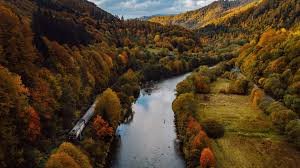
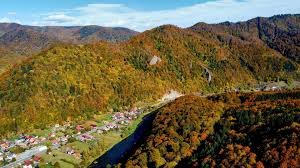
Photo sources: terjhazavandor.ro · Mureș Gorge Nature Park · local sources
Before you set out
Activities
- Kayaking and canoeing on the Mureș — the gorge's main draw
- Mountain biking and hiking in the surrounding mountains
- Horse riding and archery (at local guesthouses)
- Caving and rock climbing
- Panoramic train ride (Toplița–Deda section)
Important warnings
- Protected area — follow the park rangers' rules
- Wild habitat: bears and wolves may be present
- River water is cold and can be dangerous during floods
- Solo water sports are not recommended
- Camping only with a permit and in designated areas
How to get there
- From Toplița: along the DN15 main road heading west
- From Târgu Mureș: DN15 eastwards, entering after Deda
- By train: on main line 400 (Brașov–Satu Mare)
- The full 40 km gorge stretch can be driven by car
- GPS centre: 46.97° N, 24.99° E
Best time to visit
- Spring to early autumn (April to October)
- In July: Mureș Valley Festival
- The winter landscape is also picturesque, but water sports are out of the question
- Autumn foliage: late September to October
- The river level rises during rainy periods
Wass Albert's landscape
The Mureș Gorge and the Upper Mureș valley form the picturesque setting of Wass Albert's novel cycle "The Witch of Funtinel". Its heroes — including the mystical witch — live here, around Deda, Răstolița, Androneasa and Stânceni.
The places featured in the novel can still be identified today: the clearing of the Funtinel stream, the valley of the Sălard brook, and the famous great flat-topped rock, "God's Seat". Anyone who loves Wass Albert's work can visit every setting of the novel here — by train or by car.
Did you know?
Here the Mureș cuts its way between the Călimani and Gurghiu Mountains — a geologically very rare phenomenon, with a river squeezed between two volcanic ranges.
Travelling along the railway through the Mureș Gorge — main line 400 — you see tunnels, bridges and rock-cut sections: a Transylvanian railway masterpiece comparable to the Olt Valley.
The more than 100 cave formations in the gorge are the result of millions of years of limestone erosion — natural shelters for bats and other cave-dwelling species.
The Mureș — Transylvania's longest river — sets off from here westward through the 110 km Upper Mureș Valley, later reaching Târgu Mureș, Arad and finally the Tisza.