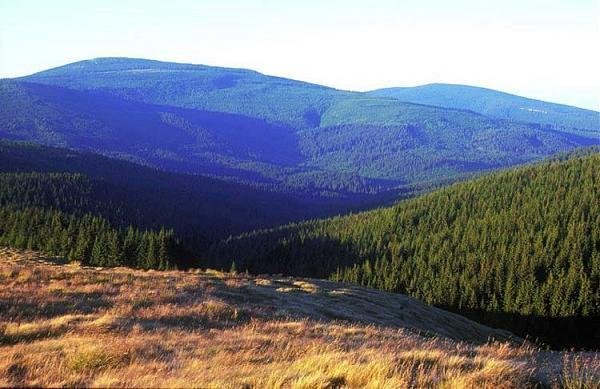
Harghita-Mădăraș
At 1,801 metres in the heart of Transylvania — the northern remnant of an ancient stratovolcanic crater rim,
where carved wooden grave posts and national ribbons on the summit proclaim the sacred meaning of the place.
The sacred mountain of the Székelys
Harghita-Mădăraș (1,801 m) is the highest peak of the Harghita Mountains and Székely Land — popularly called the "sacred mountain of the Székelys". It is the northern remnant of the rim of a former stratovolcanic crater, from which on a clear day you can see the entire Transylvanian Basin and the ridges of the Southern Carpathians.
The name "sacred mountain of the Székelys" was first used by Péter Tófalvi after 1998 — since then it has gradually entered common usage. Older names: Galusz-tető, Nagy-Hargita, Havas, Nagy-havas, Nagyerdő.
Harghita-Mădăraș is the most visited peak of the Harghita Mountains — at once a hiking paradise, ski slope and pilgrimage site. On the north-western side, at 1,650 metres altitude, stands the Harghita-Mădăraș mountain refuge, built in 1941 with the support of the Hungarian government.
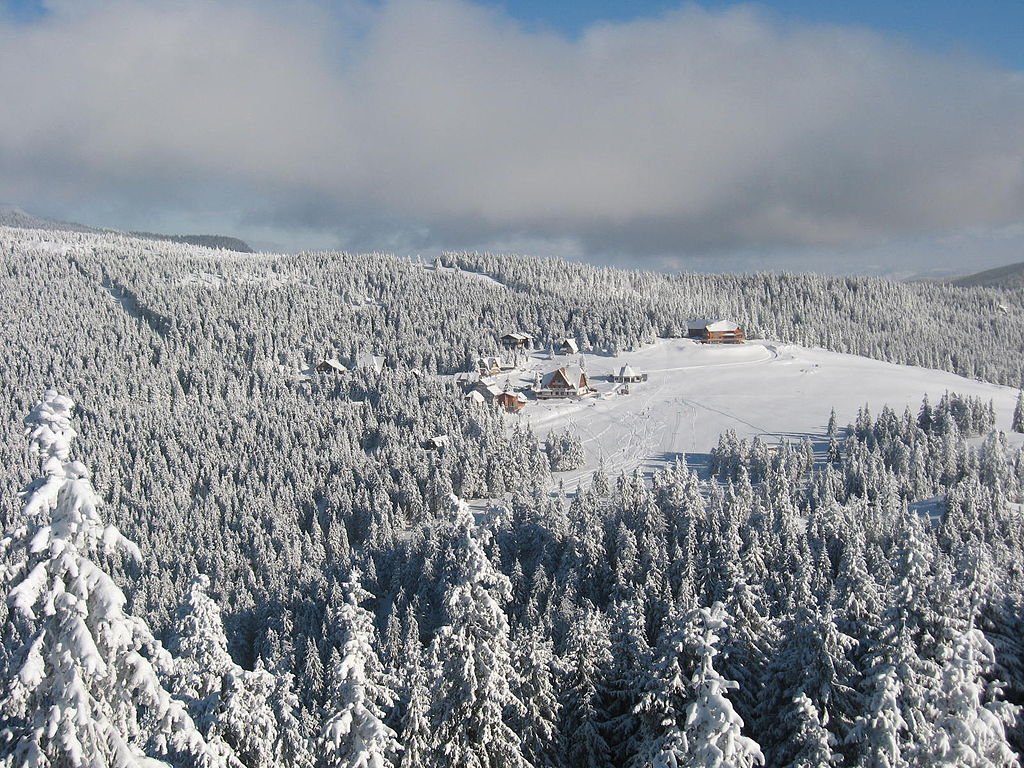 The Harghita-Mădăraș summita kopjafákkal · helyi forrás
Memory of an ancient volcano
Harghita-Mădăraș is an andesitic mountain of volcanic origin — part of the Călimani–Gurghiu–Harghita volcanic range, one of the largest volcanic remnants of the Eastern Carpathians. The former crater was 5 km wide; today its rim is formed by several still partly recognisable peaks.
From the southern side rises the Harghita's longest watercourse, the Vârghiș stream — which later carved the dramatic Vârghiș Gorge. Thanks to post-volcanic activity, the surrounding area is rich in iron- and magnesium-bearing, strongly carbonated mineral-water springs and mofettes.
The 5 main peaks of the Harghita range
The Harghita Mountains are the remnant of a former semicircular stratovolcanic crater whose rim is formed by 5 main peaks — each rising above 1,700 metres:
Harghita-Mădăraș
The highest, on the northern rim of the crater
Harghita-Racu
Second-highest peak
Harghita-Ciceu
Băile Harghita lies on its southern side
Harghita-Siculeni
The south-eastern rim of the crater
Mihály Mountain
The north-western guardian of the crater
Plus the outer guardian peak of the crater rim, Oltárkő (1,358 m) — one of the most important stations on the blue-cross trail leading up to Harghita-Mădăraș.
How to get to the top
1. From Izvoare — the most common
From Sub Cetate, 8 km of asphalt road to Izvoare, then 2.5 km of stony track, finally rising asphalt up to the refuge (1,650 m). From there about 1 hour on foot to the summit. Snow chains are needed in winter.
2. Tractor transport
From the Filia junction by tractor trailer: 9 km all the way through fir forest to the refuge, from there on foot to the summit. An atmospheric winter option.
3. From Vlăhița — blue cross
A longer but more scenic hike. Route: TourInfo office → thermal bath → Csonka → Oltárkő → Hegyes-kő → Kazán-sarka → refuge.
The mountain of carved grave posts, crosses and national ribbons
 Carved grave posts, crosses and national ribbons on the Harghita-Mădăraș summit · local source
The Harghita-Mădăraș summit is not only a tourist destination — it is also a place of pilgrimage. On reaching the top, a forest of carved grave posts and crosses, wooden statues and "shaman" pillars, along with smaller and larger stone cairns, testifies that this is a deeply important sacred place for the Székely and Hungarian communities.
National ribbons and wreaths remain on the summit all year round, and many visitors leave behind a small stone cairn or a prayer booklet. The summit is an especially important pilgrimage site for Hungarian communities in Hungary and the diaspora.
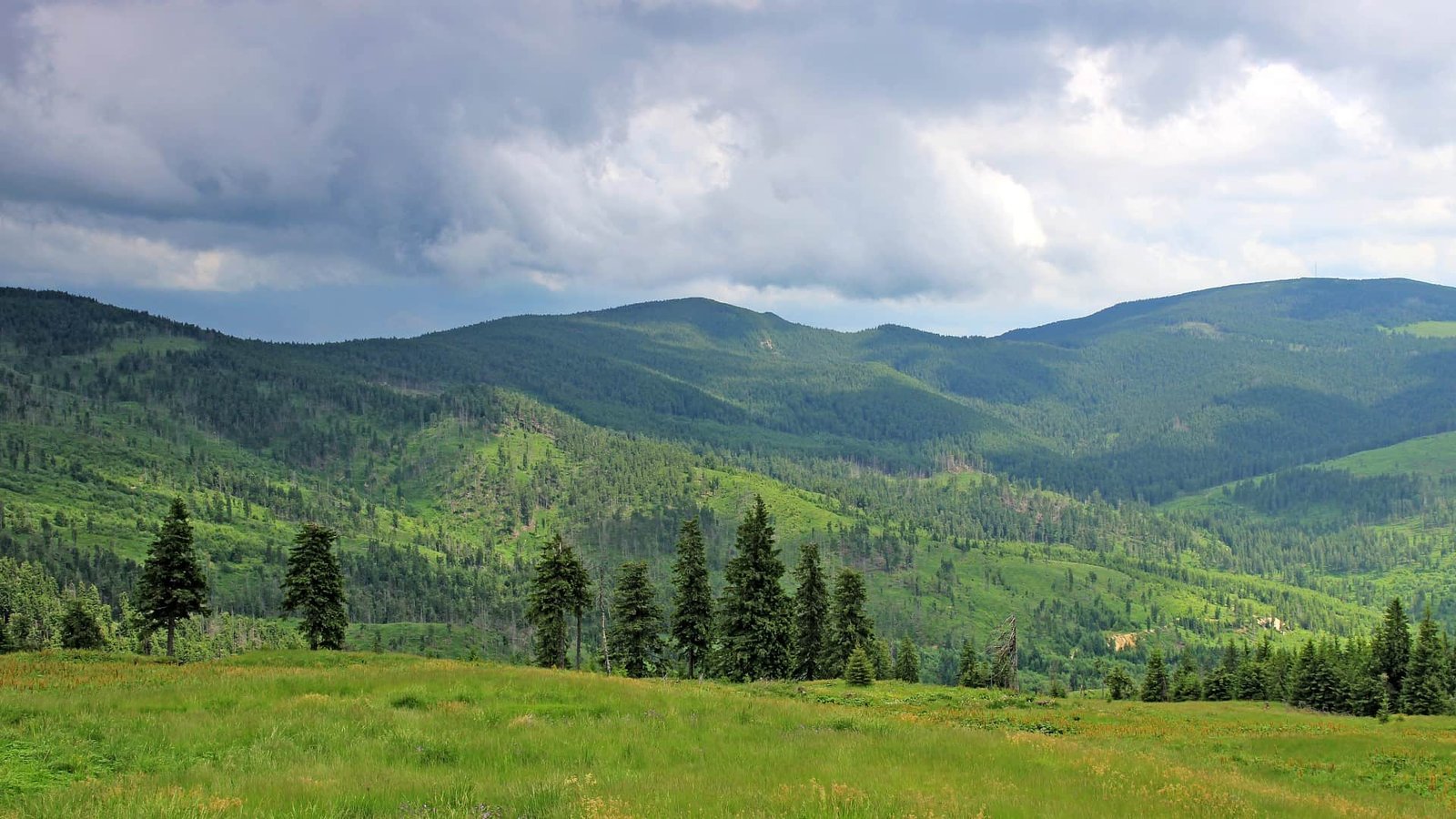
The 360° panorama takes in almost the entire Transylvanian Basin — on a clear day a vast stretch of the inner Carpathian arc is visible.
Harghita-Mădăraș in pictures
Photo sources: local sources
When is it most beautiful?
Spring (April–June)
After the thaw, the slopes turn yellow with wild flowers. Fresh green, cool fir scent, few tourists — the most popular hiking season.
Summer (July–August)
The peak season — quick hikes, family picnics on the plateau. Summer camps and cultural events around the refuge.
Autumn (September–October)
Glorious colours in the Harghita's deciduous woods, crystal-clear panorama. The air is at its purest — you can see far.
Winter (December–March)
Ski season on the Șugău and Nagy-Mihály slopes. The summit turns into a snowfield — winter pilgrimage is a special experience.
Useful information
How to find
- Location: Harghita Mountains
- County: Harghita
- GPS: 46.4399° N, 25.5829° E
- Elevation: 1,801 m
Getting there
- From Odorheiu Secuiesc: 36 km
- From Miercurea Ciuc: ~50 km
- Route: Zetea → Izvoare
- From the barrier, 9 km to the refuge
When
- Open to visit all year round
- Ski season: Dec–Mar
- Hiking season: May–Oct
- Entry: free (small road fee in lei)
Tips
- Layered clothing — it is cool up top
- Hiking boots and rain jacket are essential
- Water and food — little available up top
- Book a place at the refuge in advance!